If a skyscraper is slightly tilted, can optical fibers detect it?
Not only can it be fully sensed, but the monitoring sensitivity is also extremely high.
In the field of Structural Health Monitoring (SHM), fiber optic sensing technology has been widely used in the monitoring of minute tilts, settlements, and attitudes of super high-rise buildings, large bridges, and tower structures.
I. Physical Mechanisms and Measurement Principles
The bare optical fiber itself is a silica glass fiber and cannot directly sense the direction of the gravity vector. In actual civil engineering, the micro-tilt sensing of buildings by optical fibers is mainly achieved through the following physical transformation mechanisms:
1. Structural Micro-strain Differential Measurement (Curvature and Tilt Inversion)
When a building is subjected to unidirectional load, foundation disturbance, or uneven settlement causing slight tilting, the bearing columns or core shear walls of the building will undergo extremely small bending deformation.
- The side facing the tilt will produce micro-tensile strain (\\varepsilon_t), and the opposite side will produce micro-compressive strain (\\varepsilon_c).
- Fiber Bragg Grating (FBG) strain sensors are installed in pairs on symmetrical cross-sections of the structure to measure the micro-strain difference on both sides:\\Delta \\varepsilon = \\varepsilon_t - \\varepsilon_c
- The physical relationship between the cross-sectional curvature \\kappa and the tilt deformation is:\\kappa = \\frac{\\Delta \\varepsilon}{D}(where D is the geometric distance between the FBG measurement points on both sides)
The measurement resolution of fiber Bragg grating strain systems can generally reach 1\\ \mu\\varepsilon (i.e., the relative change in length is only 10^{-6}) or even sub-microstrain levels, easily capturing the micron-level or even arcsecond-level attitude deviations of building structures.
2. Foundation Uneven Settlement and Displacement Calculation
Macroscopic overall tilt of buildings is usually caused by uneven foundation settlement. Between adjacent bearing columns or settlement observation points, the vertical relative height difference change \\Delta h between the datum points is monitored through fiber optic displacement meters or fiber optic static leveling pipes.
- The overall tilt angle \\theta of the building can be directly calculated by geometric trigonometry:\\theta \\approx \\frac{\\Delta h}{L}(where L is the horizontal span between the two observation columns)
3. Inertial Pendulum / Gravity Tilt Conversion Structure
Specialty fiber optic tiltmeters on the market usually encapsulate a pendulum mechanism inside. When the building shell tilts, the pendulum deviates from its original equilibrium position due to gravity, compressing or pulling the internal elastic beam, thereby converting the gravity tilt change into a drift of the fiber Bragg grating reflection wavelength \\Delta \\lambda_B.
II. Core Product Series Description
In terms of product classification, it should be noted: the specialty “Fiber Bragg Grating Tiltmeter” based on an internal gravity pendulum mechanism is not part of the core standardized product series of Beijing Dacheng Yongsheng Technology Co., Ltd. (OFSCN®).
However, in the engineering implementation of structural tilt and attitude monitoring, OFSCN® provides fiber Bragg grating sensors for structural micro-strain, displacement, and three-dimensional spatial shape changes to obtain tilt and deformation data of buildings:
1. OFSCN® Alloy Tube Packaged Fiber Bragg Grating strain sensor
Encased in an elastic metal tube, it is suitable for installation on the surface of bearing columns or embedded in concrete components. It monitors the micro-bending and tilt attitude of the structure through micro-strain differential measurement.



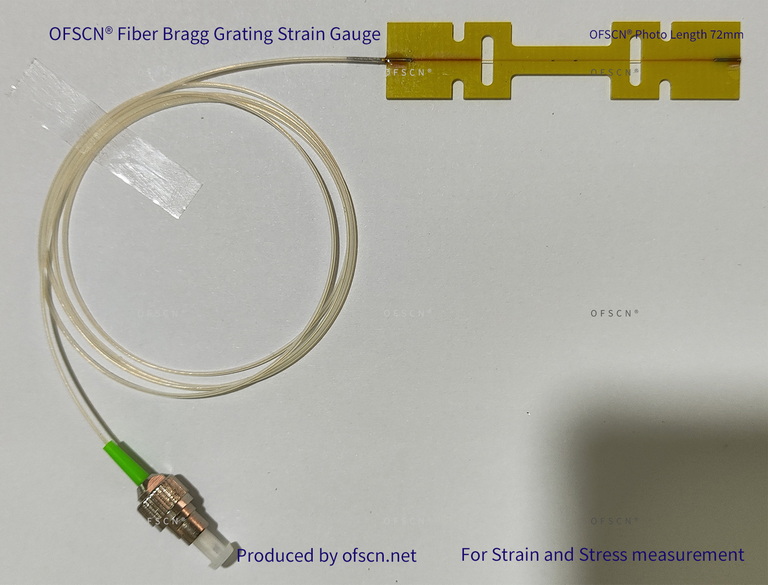
2. OFSCN® Fiber Bragg Grating Strain Gauge
Encased with an I-beam metal base, it features a single measurement segment and a surface-mounting design, suitable for micro-strain monitoring of critical stress nodes in building steel structures.
3. OFSCN® Fiber Bragg Grating Displacement Sensor
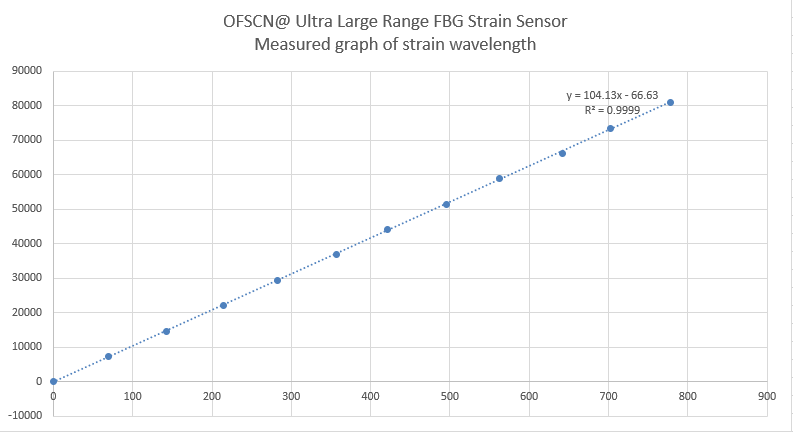
Based on a large strain range to extract displacement parameters, it can be installed between settlement joints and column base joints to measure uneven displacement and convert it into tilt angles.

4. OFSCN® Fiber Bragg Grating Shape Sensor
Internally integrates multiple fiber Bragg grating measurement segments arranged at 120^\circ intervals along the space, used to continuously measure the bending shape, curvature, and relative spatial attitude of components in three-dimensional space.


