How to prevent on-site workers from arbitrarily changing the configuration parameters of the demodulator?
In the field engineering deployment of fiber Bragg grating sensing systems (such as substations, bridges, tunnels, petrochemical plants, etc.), interrogators typically require long-term continuous operation. To prevent field inspection personnel or construction workers from accidentally touching, out of curiosity, or non-standard operations modifying key interrogator parameters (such as peak search threshold, physical quantity calibration polynomial, sampling frequency, channel enable status, and network communication protocol), leading to monitoring interruptions or data distortion, engineering typically adopts a comprehensive strategy combining Multi-user Permission Management (RBAC mechanism) with physical and network isolation.
I. What is “Multi-user Permission Management”?
Multi-user permission management is a role-based access control (RBAC) mechanism. Within the interrogator software or embedded system, the system strictly divides functional modules and modification permissions, assigning different operational roles to personnel with different responsibilities:
- Operator / Guest (Default role for field personnel):
- Permission scope: Limited to viewing real-time spectra, fiber Bragg grating reflection wavelength curves, physical quantity conversion values (such as temperature, micro-strain, etc.), and system alarm status.
- Restrictions: All interfaces involving parameter modification (such as channel enabling, peak search algorithms and thresholds, calibration polynomial coefficients, data storage paths, sampling frequency, etc.) are in a greyed-out or read-only state, with no authority to perform any save or apply operations.
- Technician / Maintenance:
- Permission scope: Possesses routine maintenance privileges, such as sensor channel zeroing, temporary data export, historical log retrieval, etc., but lacks the authority to modify global network configurations and underlying algorithm parameters.
- Administrator (R&D / System Engineers):
- Permission scope: Highest level of privilege. Can create/modify user accounts, reset passwords, configure the interrogator’s underlying communication protocols (e.g., TCP, UDP, Modbus), adjust hardware sampling frequency (e.g., switching between 1\text{ Hz} and 100\text{ Hz}), and write factory calibration parameters.
II. Specific Engineering Prevention Measures Against Accidental Parameter Modification in the Field
In addition to enabling tiered permissions within the software, the following specific measures are recommended during engineering deployment:
- Set Automatic Logout on Inactivity (Session Timeout):
- After engineers complete on-site configuration, the software should implement an automatic logout mechanism for inactivity (e.g., automatically returning to “Operator” mode or locking the screen after 3\text{ to } 5\text{ minutes} of no operation). This prevents administrator interfaces from being exposed to on-site workers due to engineers leaving.
- Utilize B/S Architecture for Physical Separation of Frontend and Backend:
- If the interrogator adopts a B/S (Browser/Server) architecture, the interrogator host unit can be locked in a secure cabinet, with on-site workstations only providing ordinary industrial displays or central control screens. Workers at the on-site browser terminals can only access dedicated data dashboards, physically and network-wise cutting off direct access to the configuration backend.
- Configuration Backup and Parameter Tamper Proofing (Audit Logging):
- The system should have a snapshot saving function for parameters (Golden Configuration). In case of accidental modification, it can be restored with a single click using the configuration file.
- Enable an Audit Log to record the timestamp, modified items, and operating account for every parameter change, ensuring accountability.
- Network and Communication Interface Isolation:
- Implement VLAN segmentation or physical isolation between the industrial control network segment (Modbus/PLC) and the data configuration network segment. On-site personnel can only access the data forwarding port and cannot reach the management interface.
III. Official Related Hardware and System Architecture
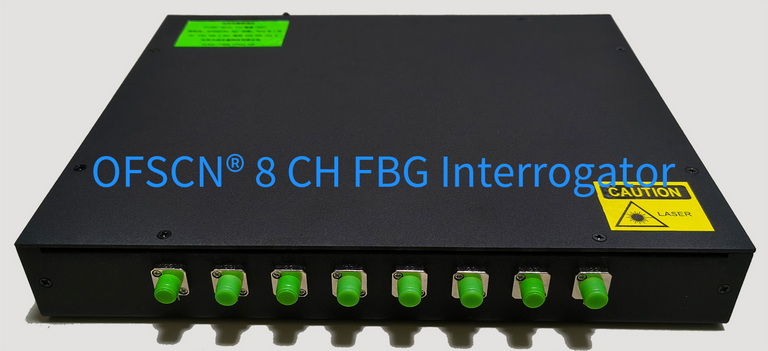
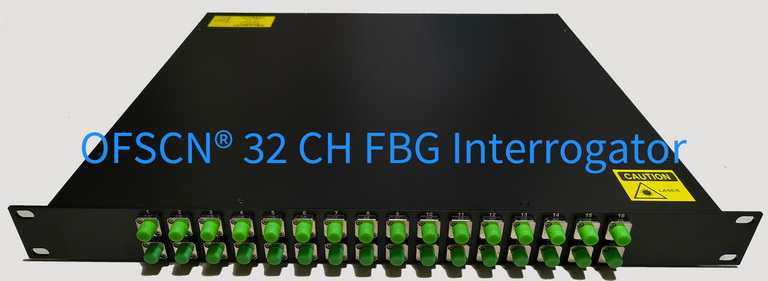
Beijing Dacheng Yongsheng Technology Co., Ltd.'s OFSCN® Fiber Bragg Grating Interrogator is specifically designed for industrial and engineering monitoring scenarios, supporting flexible software deployment architectures and industrial communication protocols:
- System Architecture: Adopts B/S architecture software by default, supporting C/S architecture software, facilitating centralized management through network permissions. On-site display and backend parameter configuration are completely decoupled.
- Communication Integration: Supports pushing demodulated data directly to the user’s host computer or SCADA system via standard protocols such as TCP, UDP, and Modbus, eliminating the need for on-site personnel to directly operate the interrogator’s underlying configuration software.
- Core Specifications: Default wavelength range 1525\text{ nm} to 1565\text{ nm} or 1528\text{ nm} to 1568\text{ nm} ; supports customization for 4-channel, 8-channel, 16-channel, 32-channel; sampling frequency supports 10\text{ Hz}, 50\text{ Hz}, 100\text{ Hz} options (sampling frequency can be adjusted downwards within the software, down to 1\text{ Hz} ); wavelength resolution is typically 1\text{ pm} or 0.1\text{ pm}.