Iven | www.ofscn.org
Last Updated: 15 February 2026
Alias: Micro Strain Sensor, OFDR Optimized Fiber Sensor, 0.6mm SST Strain Probe, Small Diameter Strain Gauge, HD-FOS (High-Definition Fiber Optic Sensing), High-Modulus Strain Transfer, Pre-terminated Strain Unit, Metal-clad Fiber Probe, Structural Health Monitoring (SHM) Sensor, Embedded Fiber Sensor, Harsh Environment Strain Sensing.
This is a companion discussion topic for the original entry at https://www.ofscn.org/dofs/700-c-ofdr-strain-sensor.html
This topic discusses the OFSCN® 700°C OFDR Micro All-Metal Strain Sensor, a specialized tool for structural health monitoring in extreme environments.
Technical Overview
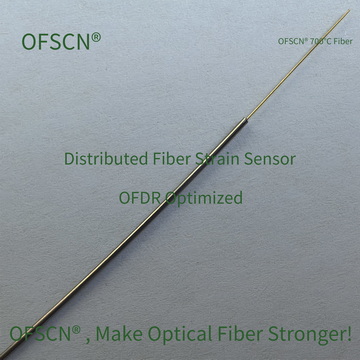
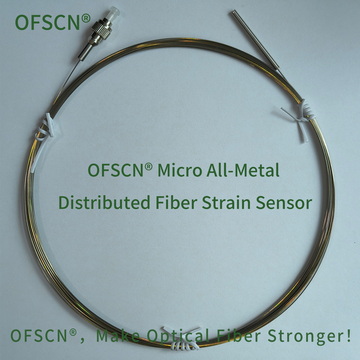
The OFSCN® 700°C OFDR Micro All-Metal Strain Sensor is designed for distributed strain and stress measurement. Unlike traditional sensors that may fail at high temperatures due to adhesive degradation, this sensor utilizes an all-metal encapsulation.
Key Specifications:
- Encapsulation: Single-layer elastic alloy tube.
- Outer Diameter: Ultra-slim 0.6 mm.
- Fiber Type: Integrated with OFSCN® Gold-coated Optical Fiber, which is essential for maintaining mechanical integrity and signal transmission at 700°C.
- Measurement Technology: Optimized for Optical Frequency Domain Reflectometry (OFDR), but also compatible with other distributed sensing methods.
Product Visuals
Application Logic
Because this sensor has a diameter of only 0.6mm and a high-modulus metal shell, it is specifically suited for:
- High-Temperature Environments: Stable operation up to 700°C.
- Embedded Sensing: Its small profile allows it to be embedded into composite materials or metal structures without significantly compromising the structural integrity.
- High-Definition Sensing: Providing millimeter-level spatial resolution when used with an OFDR interrogator.
If you are considering this for a specific project, could you please clarify the following:
- What is the specific material of the structure you intend to monitor?
- How do you plan to install the sensor (e.g., surface bonding, welding, or embedding)?