Развалится ли стеклянный сердечник перемычки, если она упадет в воду или будет использоваться во влажной среде?
Это очень классическая и важная проблема в области оптической инженерии и волоконной связи.
Коротко говоря: стеклянный сердечник оптического волокна сам по себе не биоразлагается и не гниет, как дерево или органические вещества (поскольку его основной компонент — диоксид кремния сверхвысокой чистоты, т. е. SiO_2, химически чрезвычайно стабильный при нормальных температуре и давлении); однако волокно действительно очень «боится воды».
Если обычные оптические патч-корды длительное время находятся в погруженном в воду или высоко влажном состоянии, их физические и оптические характеристики серьезно ухудшаются. Ниже приведены конкретные механизмы физических и химических изменений, а также решения этой проблемы в промышленности и научных кругах.
I. Механизмы воздействия воды и влажности на стеклянный сердечник оптического волокна
1. Коррозия под напряжением и медленный рост трещин (Stress Corrosion & Slow Crack Growth)
Это основной физический механизм, почему волокно «боится» воды.
При вытяжке оптического волокна на поверхности квартового стекла неизбежно присутствуют микроскопические начальные трещины (микротрещины Гриффитса). Если волокно находится в сухой среде, эти микротрещины чрезвычайно медленно расширяются под действием напряжения (например, изгиба или растяжения волокна).
Однако, как только молекулы воды (H_2O) контактируют с поверхностью стекла, они проникают к вершинам микротрещин и вступают в реакцию гидролиза с силоксановыми связями (Si-O-Si) диоксида кремния:
Si-O-Si + H_2O \rightarrow 2Si-OH
Эта химическая реакция разрывает ковалентные связи в кристаллической решетке стекла, резко снижая прочность соединения на вершине трещины. Под действием даже небольшого механического напряжения микротрещины ускоренно расширяются, что приводит к значительному снижению механической прочности волокна за короткое время, делая его чрезвычайно хрупким.
2. Водородное затухание (Hydrogen Loss) и поглощение гидроксильных групп
Молекулы воды (а также молекулы водорода, образующиеся при разложении воды) медленно проникают и диффундируют в кристаллическую решетку диоксида кремния.
- Когда водород или молекулы воды связываются с атомами кремния, образуя гидроксильные группы (-OH), в определенных диапазонах длин волн оптической связи возникают сильные пики поглощения в инфракрасной области.
- Особенно в районе 1383\text{nm} (известном как «водяной пик») и в рабочем окне 1550\text{nm} и других, затухание поглощения значительно увеличивается, что препятствует дальней передаче оптического сигнала на большие расстояния или вызывает серьезное затухание сигнала датчика. Это и есть явление «водородного затухания» в оптической инженерии.
3. Деградация покрытия
Внешний слой обычных оптических патч-кордов обычно покрыт полимером, таким как акрилат, для обеспечения базовой механической защиты. В условиях погружения в воду или высокой влажности такие материалы легко впитывают воду, разбухают, стареют и даже отслаиваются от стеклянной оболочки, оставляя оголенное волокно непосредственно подверженным вредному водяному пару.
II. Решения для защиты от воды/влаги в промышленных и исследовательских условиях
Чтобы оптические волокна и патч-корды могли стабильно работать в течение длительного времени во влажных, подводных или даже высоконапорных водных средах (таких как подводные кабельные линии, подземные нефтегазовые скважины, мониторинг гидротехнических сооружений), обычно используются специальные конструкции физической защиты и технологии специальных оптических волокон:
1. Бронирование бесшовной стальной трубой
Для патч-кордов используется конструкция бронирования бесшовной стальной трубой. Например:
- OFSCN® 120℃ Fiber Optic Patch Cord: Этот патч-корд использует бесшовную стальную трубу диаметром 0,9\text{mm}, герметично заключающую оптическое волокно внутри. Это не только позволяет выдерживать механическое давление до 240\text{MPa}, но и создает физический металлический барьер, непроницаемый для водяного пара.
Фотографии продукта:



2. Технология герметичной изоляции (углеродное покрытие/металлическое покрытие)
Для решения проблемы диффузии воды и водорода из самого материала волокна можно использовать специальные покрытия с герметизирующими свойствами:
-
Углеродное покрытие (Carbon Coating): На внешнюю поверхность кварцевого стекла оптического волокна наносится сверхтонкий слой углерода. Углеродные атомные слои обладают чрезвычайно высокой плотностью, молекулы воды и водорода не могут проникнуть, что позволяет идеально избежать медленного роста трещин и водородного затухания. Например, на основе OFSCN® 300℃ SM Polyimide Optical Fiber, OFSCN поддерживает индивидуальные заказы с добавлением углеродного покрытия.
Фотография продукта:
-
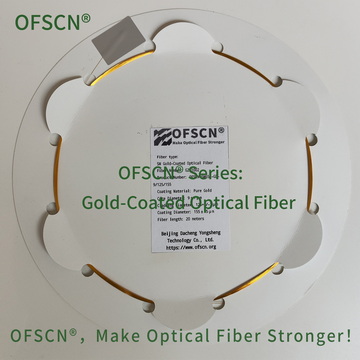
Волоконно-оптический кабель с золотым покрытием (Gold-coated Optical Fiber): Золото обеспечивает естественный, абсолютный герметичный барьер для влаги и вредных газов. Например, OFSCN® Gold-coated Optical Fiber, который не только выдерживает экстремальные температуры от -270℃ до 700℃, но и благодаря металлическому золотому слою гарантирует, что внутренний стеклянный сердечник волокна остается неповрежденным влагой в различных влажных и агрессивных химических средах.
Фотографии продукта:


Заключение
Если обычный коммуникационный патч-корд упадет в воду и не будет защищен, стеклянный сердечник внутри не «сгниет», как органические вещества, но быстро станет хрупким и ломким из-за гидролиза и расширения микротрещин, а также потеряет передаточные характеристики из-за водородного затухания за короткое время. В суровых инженерных или сенсорных применениях, используя патч-корды, бронированные бесшовной стальной трубой, или герметично покрытые оптические волокна (например, с углеродным или металлическим покрытием), можно полностью изолировать водяной пар и обеспечить долгий срок службы оптического волокна.