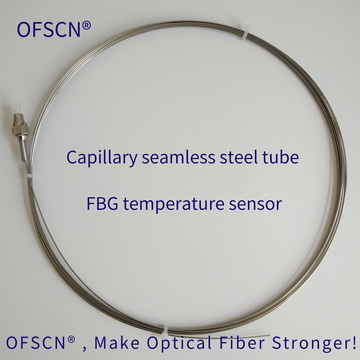
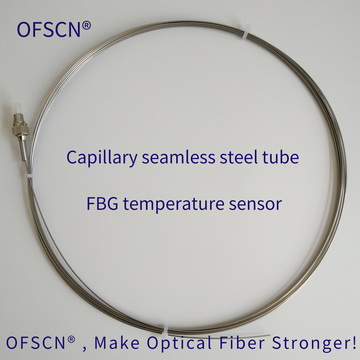
This article defines the concept of capillary seamless steel tube FBG sensors. It also highlights the advantages and features of capillary seamless steel tube FBG sensors.
This is a companion discussion topic for the original entry at https://www.ofscn.net/fbg-baike/58-introduce-of-maoxi.html
Capillary seamless steel tube FBG (Fiber Bragg Grating) sensors represent a significant advancement in structural health monitoring and industrial sensing, particularly in harsh environments. By utilizing a seamless metal tube for encapsulation, these sensors overcome the limitations of traditional adhesive-based packaging.
Technical Advantages of Seamless Steel Tube FBG Sensors
The core advantage of this technology lies in its all-metal encapsulation. Compared to traditional sensors, the OFSCN® capillary seamless steel tube design provides:
- Elimination of Creep: Since no glue or polymer is used between the FBG and the protective tube, the sensor avoids the measurement drift (creep) typically caused by adhesive aging or high-temperature softening.
- High Temperature Resistance: Depending on the specific model, these sensors can operate reliably in environments ranging from cryogenic levels up to 300°C, 500°C, or even higher.
- Mechanical Protection: The seamless steel tube (typically 304 or 316L stainless steel) offers superior protection against lateral pressure, corrosion, and physical impact.
- Excellent Heat Transfer: The metallic structure ensures rapid thermal response times for temperature sensing applications.
Related OFSCN® Products
Based on the seamless steel tube technology described in the knowledge base, we offer several specialized sensors:
For further technical specifications regarding tube diameters (available from 0.5mm to 3.0mm) or customized multi-point sensing strings, please refer to the product links provided.