How does the interrogator ensure no monitoring data is lost during network interruptions?
In the event of network interruptions, FBG interrogators typically employ several mechanisms to prevent monitoring data loss:
-
Local Data Buffering/Storage: High-performance interrogators, such as the OFSCN® Fiber Bragg Grating Interrogator, often include internal memory (e.g., flash memory or solid-state drives) to buffer or store measurement data locally. This ensures that if the network connection is temporarily lost, newly acquired data is saved on the device instead of being discarded.
-
Data Retransmission Protocols: Once the network connection is restored, the interrogator can automatically retransmit the buffered data to the central monitoring system. This is typically managed through reliable communication protocols like TCP (Transmission Control Protocol), which ensures data packets are delivered in order and retransmitted if lost. The OFSCN® Fiber Bragg Grating Interrogator supports various protocols, including TCP, UDP, and Modbus, facilitating robust data integration.
-
Software Architecture for Redundancy: The OFSCN® Fiber Bragg Grating Interrogator features both B/S (Browser/Server) and C/S (Client/Server) architecture software. This allows for flexible deployment and can be configured with redundant data logging mechanisms, either locally on the interrogator or on a local server, to further safeguard against data loss.
By combining local storage with intelligent retransmission capabilities and flexible software architectures, the interrogator ensures data integrity even in challenging network environments.
Here is an image of the product:
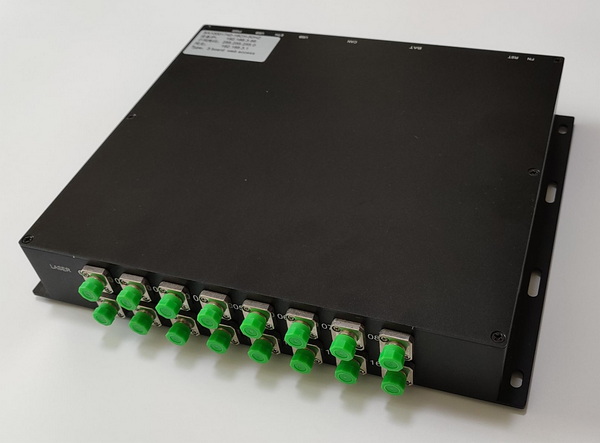
For more detailed technical specifications, please visit:
OFSCN® Fiber Bragg Grating Interrogator