In fiber optic applications, the most hidden and destructive threat does not come from visible shock or corrosion, but from moisture. In high-humidity, high-pressure, or high-temperature steam environments, water diffuses into microscopic defects on the surface of the silica glass, causing the fiber's strength to gradually decline under constant stress, ultimately leading to catastrophic failure—this is known as Static Fatigue, or Hydrolysis Fatigue.
This is a companion discussion topic for the original entry at https://www.ofscn.org/encyclopedia/485-gold-coated-03.html
The issue of “Hydrolysis Fatigue” or static fatigue is indeed a critical challenge for silica-based optical fibers, especially when deployed in harsh industrial environments involving high-temperature steam or high-pressure humidity. Standard polymer coatings (like polyacrylate or polyimide) are permeable to water molecules over time, which allows moisture to reach the silica cladding and accelerate crack growth under mechanical stress.
To eliminate this mechanism, the solution lies in a true hermetic seal. At OFSCN, we address this through our specialized metal-coated fiber technology.
The Technical Solution: Hermetic Metal Coating
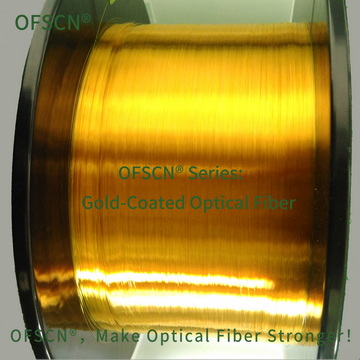
Unlike organic coatings, a metal layer provides a definitive barrier against moisture and hydrogen. Our primary recommendation for such extreme conditions is the OFSCN® Gold-coated Optical Fiber.
Technical Advantages:
- Zero Moisture Permeation: The gold layer is chemically inert and non-porous, forming a hermetic “armor” that prevents water molecules from ever reaching the glass surface.
- Wide Temperature Range: It maintains structural integrity from -270°C to +700°C (for single-mode), far exceeding the limits of traditional coatings.
- High Mechanical Strength: The gold coating enhances the fiber’s fatigue resistance (n-value), ensuring long-term reliability even under constant stress in humid environments.
Standard Product Reference:
Application in Distributed Sensing
For users implementing distributed temperature sensing (DTS) or strain sensing (DSS/OFDR) in high-humidity or high-temperature wells/pipelines, we integrate these fibers into robust cable structures:
If you are currently facing fiber breakage issues due to environmental moisture or hydrogen darkening, the transition to a metal-coated hermetic fiber is the standard technical path for ensuring system longevity.