Iven | www.ofscn.net
Last Updated: 14 August 2024
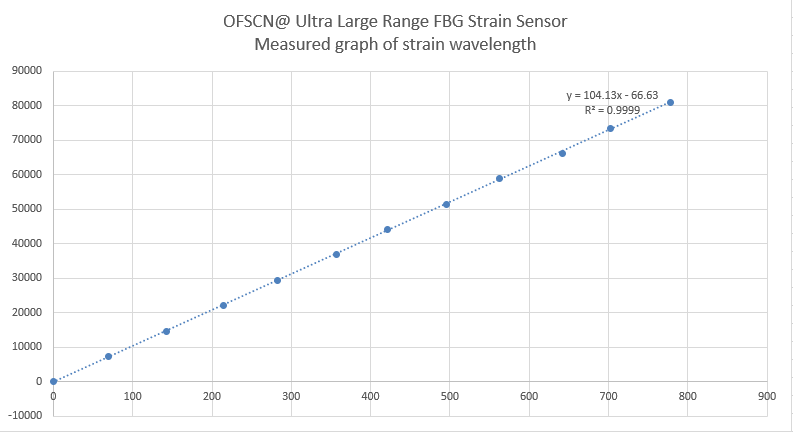
The product is a high-range fiber bragg grating strain sensor (FBG strain gauge) used for strain measurement. It is a single-ended structure that can be inserted into the test object for strain measurement, fixed using fixtures, or adhered with adhesive tape for strain measurement. The maximum range is approximately 25000 to 30000 microstrains (30000με).
This is a companion discussion topic for the original entry at https://www.ofscn.net/fbg-products/strain-sensor-5.html
This high-range Fiber Bragg Grating (FBG) strain sensor is a specialized solution designed for large deformation monitoring where traditional strain gauges would typically fail or reach their physical limits.
Technical Analysis: OFSCN® High-Range FBG Strain Sensor
The product mentioned is specifically engineered to handle extreme strain levels, reaching a maximum range of 25,000 to 30,000 microstrains (με). This is significantly higher than standard FBG strain sensors, which usually operate within the ±1500 to ±3000 με range.
Key Product Features:
- Measurement Range: Up to 30,000 με (approx. 3% elongation).
- Structure: Single-ended design optimized for insertion, immersion, or surface mounting.
- Encapsulation: Utilizes a seamless steel tube package (or similar robust housing) to ensure the internal FBG is protected while accurately transferring external mechanical strain.
- Zero Drift: As an FBG-based technology, it is immune to electromagnetic interference (EMI) and exhibits excellent long-term stability compared to electronic gauges in harsh environments.
Standard Product Visualization:
Application Scenarios
Based on the high-range capability, this sensor is particularly suitable for:
- Structural Health Monitoring (SHM): Monitoring large-scale civil engineering structures where significant movement or plastic deformation might occur.
- Geotechnical Engineering: Measuring soil or rock displacement when integrated into boreholes.
- Material Testing: Testing high-ductility materials or composites under high-stress conditions.
Relevant Product Links
For detailed technical specifications and mechanical dimensions, you may refer to the official documentation:
If you have specific technical requirements regarding the installation environment (e.g., operating temperature or mounting substrate), feel free to provide those details for further analysis.