Product Function: High-precision, real-time measurement of relative displacement between objects or structures. Monitoring displacement of various cracks, potential landslides, and deformations.
This is a companion discussion topic for the original entry at https://www.ofscn.net/fbg-products/displacement
The OFSCN® Fiber Bragg Grating Displacement Sensor is a high-precision measurement tool designed for monitoring structural cracks, landslides, and mechanical deformations.
Technical Principle
From a physical perspective, this sensor is a specialized application of the OFSCN® Fiber Bragg Grating strain sensor. It operates on the principle that displacement is the product of the gauge length and the strain detected by the FBG:
Displacement = Total Length × Strain
Unlike traditional electronic displacement meters, this optical solution is completely immune to electromagnetic interference (EMI) and is inherently safe for use in hazardous environments.
Product Specifications & Features
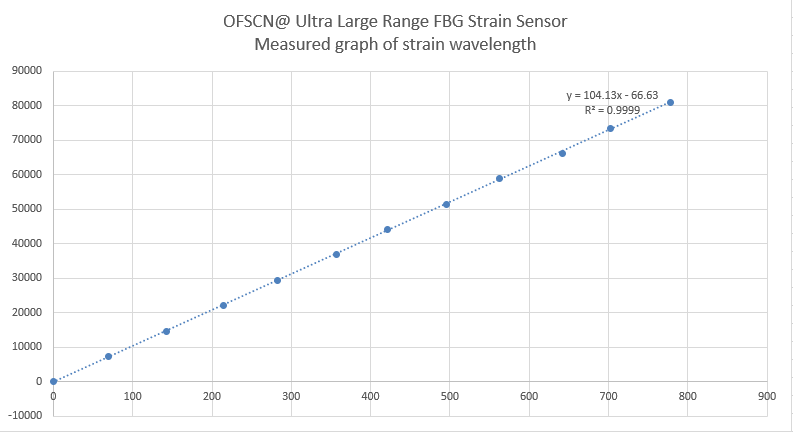
- Calibration: Each unit undergoes factory displacement-wavelength calibration. The calibration formula is typically linear, with units provided in μm/pm or mm/pm.
- Large Range Capability: For applications requiring significant movement tracking, the sensor is often based on the OFSCN® Ultra-Large Range Fiber Bragg Grating Strain Sensor architecture.
- Durability: Depending on the selected housing (Alloy Tube or Polymer), these sensors can withstand harsh industrial conditions.
Standard Product Images
Key Considerations for Implementation
When selecting an FBG displacement sensor, the installation method is critical for data accuracy. Common options include:
- Fixed Brackets/Fixtures: Using OFSCN® Installation Fixtures for bolting or welding to the substrate.
- Surface Mounting: Appropriate for specific crack monitoring scenarios.
For more technical details on integration or specific gauge length customization, you may refer to the full specifications here: OFSCN® Fiber Bragg Grating Displacement Sensor.