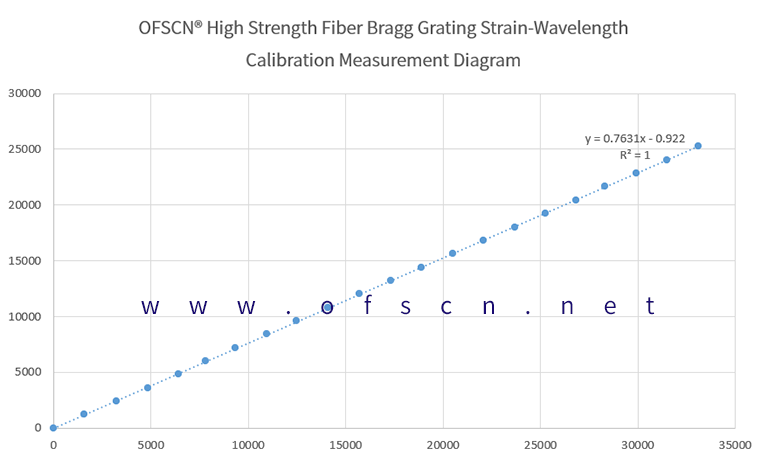
Product Aliases: Femtosecond laser FBG, high-strength FBG, high-reliability FBG, high-temperature FBG, polyimide FBG, non-stripped coating FBG, High-strain Fiber Bragg Grating, High-tensile Fiber Bragg Grating.
This is a companion discussion topic for the original entry at https://www.ofscn.net/fbg-products/high-strength-fbg.html
Welcome to the OFSCN® official forum.
The products mentioned above belong to our high-reliability series, specifically designed for demanding environments where traditional sensors often fail. Based on the technical specifications for these products, here is a brief overview of their primary applications and capabilities:
Technical Overview
These Fiber Bragg Gratings (FBGs) are characterized by their “no-stripping” manufacturing process. By utilizing femtosecond laser technology to write the grating directly through the coating, the mechanical integrity of the glass fiber is preserved.
- OFSCN® High-Strength Fiber Bragg Gratings / Fiber Bragg Grating Strings (Bare): These offer significantly higher tensile strength compared to standard stripped-and-recoated FBGs, making them ideal for high-strain monitoring.
- OFSCN® Polyimide Fiber Bragg Gratings / Fiber Bragg Grating Strings (Bare): Capable of withstanding temperatures up to 300°C while maintaining excellent strain transfer characteristics.
- OFSCN® thin-diameter Fiber Bragg Gratings: Designed for applications with space constraints or where minimal intrusive impact is required.
Product Visuals
Below are standard images representing the high-strength and specialized FBG series:
Consultation for Application
If you are considering these for a specific engineering project, please clarify the following technical requirements so we can provide a more precise recommendation:
- Temperature Range: What is the maximum operating temperature for your application?
- Installation Environment: Will these be embedded in materials (like composites), surface-mounted, or used as bare strings?
We are available to discuss the technical parameters further.