cmh
Last Updated: 10 January 2026
Across kilometers of oil and gas pipelines, within exploration wells thousands of meters deep, or inside high-temperature chemical transport systems, traditional point-type sensors have long reached their limits. How can we achieve real-time, zero-blind-spot monitoring across entire spans? How can we ensure data stability for years under the dual challenges of intense heat and corrosion?
This is a companion discussion topic for the original entry at https://www.ofscn.org/encyclopedia/508-dofs-300-c-sst-optical-cable-01.html
For industrial long-distance monitoring in extreme environments, the transition from traditional point-type sensors to distributed fiber optic sensing (DOFS) is a significant technological leap. To ensure the stability and accuracy of data in such conditions, the choice of protective packaging for the optical fiber is critical.
Based on the technical requirements for high-temperature and corrosive environments mentioned, I would like to highlight the following professional solution:
This product is specifically engineered for distributed temperature sensing (DTS) and distributed acoustic/strain sensing (DAS/DSS) in challenging industrial scenarios.
Key Technical Advantages:
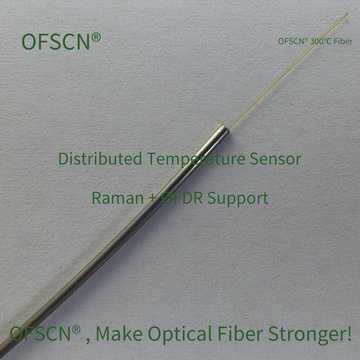
- High-Temperature Resistance: It utilizes a specialized OFSCN® 300℃ Polyimide Optical Fiber, allowing for stable operation in environments ranging from -200°C to +300°C.
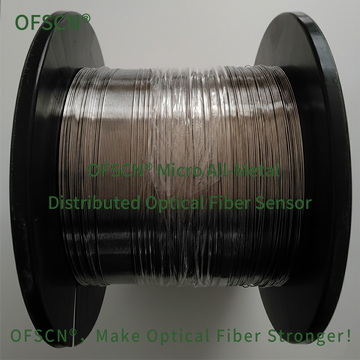
- Seamless Steel Tube (SST) Protection: The fiber is encapsulated in a single-layer seamless stainless steel tube with an outer diameter of 0.9 mm. This provides excellent mechanical protection and corrosion resistance against harsh chemical agents.
- Zero-Blind-Spot Monitoring: When paired with Raman (DTS), Rayleigh (OFDR), or Brillouin (BOTDA) interrogators, it enables real-time monitoring across the entire length of the cable, which is ideal for pipelines and deep wells.
Product Visuals:
For more detailed technical specifications, you may refer to the official documentation:
OFSCN® 300°C Distributed Fiber Temperature Sensor Technical Datasheet
If you are evaluating this for a specific project, could you please clarify the maximum continuous temperature and the specific chemical environment the cable will be exposed to?