Is this Fiber In Metal Tube (FIMT) conductive? Is it safe to use in environments with high-voltage electricity?
Yes, a Fiber In Metal Tube (FIMT) is conductive because it uses a metal tube, typically stainless steel or an alloy, for encapsulation. This metal tube provides mechanical protection and often enhances temperature resistance for the optical fiber inside.
When used in environments with high-voltage electricity, proper safety precautions must be taken due to the conductivity of the metal tube. While the optical fiber itself is dielectric, the metal casing can conduct electricity if it comes into contact with high-voltage sources. Therefore, it is crucial to ensure that the FIMT cable is either properly grounded or adequately insulated to prevent electrical hazards and interference.
OFSCN offers various Seamless Steel Tube Fiber Cables designed for different temperature ranges and applications, which are examples of FIMT. These cables feature single or double-layer seamless steel tube encapsulation.
Here are some of our relevant products:
OFSCN® 85°C Seamless Steel Tube Fiber Cable
Product Appearance:
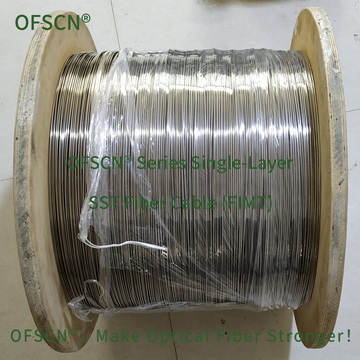
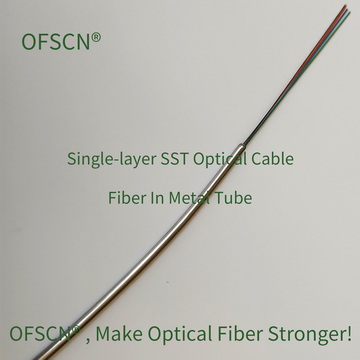
For more details, please visit: OFSCN® 85°C Seamless Steel Tube Fiber Cable
OFSCN® 200°C Seamless Steel Tube Fiber Cable
Product Appearance:
For more details, please visit: OFSCN® 200°C Seamless Steel Tube Fiber Cable
OFSCN® 300°C Seamless Steel Tube Fiber Cable
Product Appearance:
For more details, please visit: OFSCN® 300°C Seamless Steel Tube Fiber Cable
OFSCN® 650/700°C Seamless Steel Tube Fiber Cable
Product Appearance:
For more details, please visit: OFSCN® 650/700°C Seamless Steel Tube Fiber Cable
OFSCN® Double-Layer High-Temperature Downhole Fiber Optic Cable
For more details, please visit: OFSCN® Double-Layer High-Temperature Downhole Fiber Optic Cable