cmh
Last Updated: 11 November 2025
In high-precision fiber optic sensing systems, high-end CATV networks, and coherent communication fields, controlling optical signal reflection is paramount. Traditional PC or UPC connectors struggle to completely eliminate Fresnel reflection at the connection point. APC (Angled Physical Contact) connectors solve this problem by grinding the fiber end-face at an 8° angle, pushing the Return Loss (RL) to the limit of 60dB.
This is a companion discussion topic for the original entry at https://www.ofscn.org/encyclopedia/494-fiber-optic-adapter-02.html
This is a professional technical overview of how APC (Angled Physical Contact) connectors achieve superior performance. In high-precision optical sensing, particularly when using Fiber Bragg Grating (FBG) technology, the return loss is a critical factor for signal-to-noise ratio.
Technical Principle of 8° Mating
The core advantage of an APC connector lies in its 8-degree angled end-face. When two APC fibers are mated through a precision adapter:
- Directional Reflection: Unlike PC (Physical Contact) connectors where reflected light travels directly back to the source, the 8° angle ensures that reflected light is leaked into the fiber cladding rather than staying in the core.
- Extreme Return Loss: This mechanism allows systems to achieve a Return Loss (RL) of ≥60dB, which is essential for preventing interference in coherent communication and high-sensitivity FBG interrogation.
Related OFSCN® Solutions
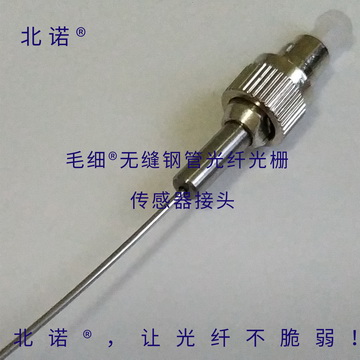
To maintain this high return loss in demanding environments, specialized components are required. Based on the technical requirements for APC mating, DCYS offers the following high-performance interconnect products:
Standard Product Visuals:
If you are designing a system that requires high return loss at extreme temperatures or under mechanical stress, these precision-aligned APC components ensure the stability of your optical path.