cmh
Last Updated: 19 October 2025
For the oil, gas, and geothermal industries, a downhole Distributed Temperature Sensing (DTS) system is a critical "lifeline" that ensures production safety and optimizes extraction efficiency. However, as exploration depths increase and well environments become more complex, traditional communication and sensing equipment face a severe challenge: extreme heat.
This is a companion discussion topic for the original entry at https://www.ofscn.org/encyclopedia/453-high-temperature-300-01.html
Downhole sensing in the oil, gas, and geothermal industries represents one of the most demanding environments for fiber optic technology. When temperatures reach 300°C, traditional fiber coatings like acrylate or even standard polyimides may degrade, leading to signal attenuation or mechanical failure of the “energy lifeline.”
For these extreme conditions, selecting the right high-temperature patch cord is critical for maintaining the integrity of Distributed Temperature Sensing (DTS) or Fiber Bragg Grating (FBG) systems.
Technical Solution for 300°C Downhole Sensing
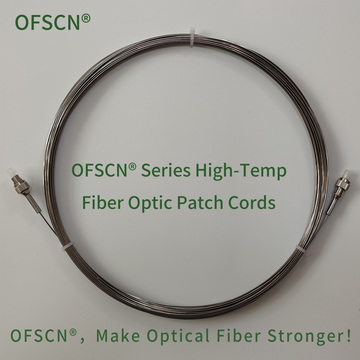
Based on the requirements for extreme heat resistance and mechanical protection, we recommend the OFSCN® 300℃ Fiber Optic Patch Cord.
Key Technical Features:
- Specialized Fiber Coating: It utilizes OFSCN® 300℃ Polyimide Optical Fiber. Unlike standard fibers, this polyimide coating is specifically engineered to withstand continuous exposure to 300°C without becoming brittle or losing its protective properties.
- All-Metal Protection: The fiber is encapsulated within a 0.9mm seamless stainless steel tube. This provides excellent lateral pressure resistance and protects the fiber from corrosive downhole fluids and gases.
- Rugged Termination: The patch cord is terminated with high-temperature resistant connectors (typically FC/APC or FC/PC) designed to maintain alignment stability under thermal cycling.
Product Visuals:
Important Considerations for System Reliability
When deploying 300°C patch cords in downhole environments, two factors are paramount:
- Hydrogen Darkening: In high-pressure hydrogen environments (common in oil/gas wells), standard fibers can suffer from increased attenuation. If your application involves high hydrogen partial pressure, a carbon-coated or pure silica core fiber variant may be required.
- Mechanical Strain: The transition between the rigid stainless steel tube of the patch cord and the wellhead equipment must be managed to prevent micro-bending or fatigue at the connection point.
For detailed technical specifications, you may visit the official product page:
OFSCN® 300℃ Fiber Optic Patch Cord Detailed Parameters