In highly corrosive environments such as chemical plants, petrochemical facilities, and downhole oil and gas operations, sensors and communication links face challenges far beyond just high temperatures. The intrusion of strong acids, strong bases, hydrogen sulfide (H2S), various organic solvents, and fuels is an "invisible killer" that causes fiber coating failure, glass hydrolysis, and ultimately system shutdown.
This is a companion discussion topic for the original entry at https://www.ofscn.org/encyclopedia/481-polyimide-coated-mm-300-04.html
In the chemical and petrochemical industries, the longevity of optical fibers is heavily dictated by the chemical resistance of their coatings. Polyimide (PI) coatings are often the preferred choice over standard acrylates when dealing with aggressive solvents and elevated temperatures, as they offer significantly better protection against glass hydrolysis and chemical degradation.
For environments involving high temperatures and corrosive substances, we offer several specialized solutions:
1. High-Temperature Polyimide Coated Fibers
These fibers are designed to withstand temperatures up to 300°C while maintaining structural integrity in the presence of various organic solvents and fuels.
Standard product image:
2. Metal-Clad Protection for Extreme Environments
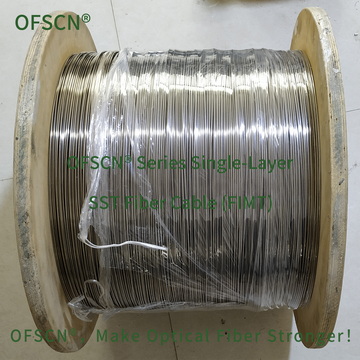
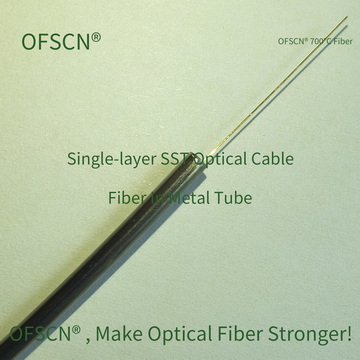
When chemical corrosion is paired with high pressure or extreme temperatures (up to 700°C), polyimide alone may not suffice. In such cases, we utilize seamless metal tube encapsulation (Fiber-in-Metal-Tube, FIMT) to provide a hermetic seal against hydrogen, H2S, and strong acids.
Standard product images:
Technical Considerations for Your Project:
To provide more specific guidance, could you please clarify:
- What is the maximum operating temperature of your environment?
- Which specific chemical agents (e.g., strong acids, H2S, or specific solvents) are the primary concern for your application?