Why does following unified data protocols facilitate interoperability between equipment from different manufacturers?
Unified data protocols facilitate interoperability between equipment from different manufacturers by establishing a common language and set of rules for data exchange. This allows diverse systems to understand, process, and share information seamlessly, regardless of their underlying hardware or software.
Here’s why it’s crucial:
- Common Understanding: Without a unified protocol, each manufacturer might use its own proprietary data format. This would be like different people speaking different languages; communication is impossible without a translator. A unified protocol acts as a universal language, ensuring all devices interpret data in the same way.
- Simplified Integration: When all devices adhere to the same protocol, integrating new equipment into an existing system becomes much simpler. Instead of developing custom interfaces or converters for each new device, engineers can rely on the standardized protocol for smooth communication.
- Reduced Development Costs: Manufacturers can focus on innovating their core product functionalities rather than spending resources on developing countless custom interfaces for compatibility with other systems.
- Flexibility and Choice: Users are not locked into a single manufacturer’s ecosystem. They can choose the best components from various vendors, knowing they will work together.
- Data Consistency: Unified protocols often define data structures, units, and messaging formats, ensuring data consistency across the entire system. This is vital for accurate analysis and reliable decision-making.
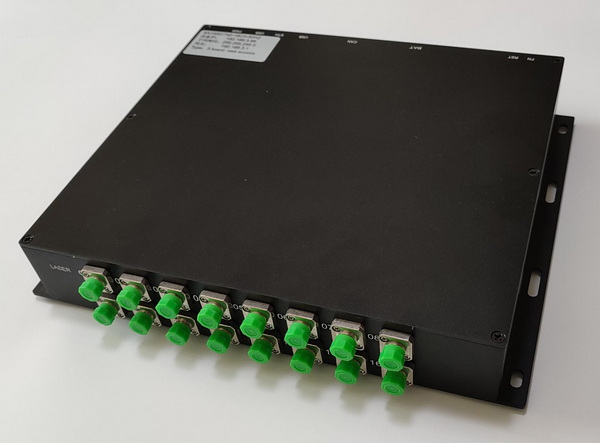
The OFSCN® Fiber Bragg Grating Interrogator, for example, supports integration with customer systems through protocols like TCP, UDP, and Modbus, which are examples of standardized communication methods that enable broader interoperability.
Here is a standard image of the OFSCN® Fiber Bragg Grating Interrogator: