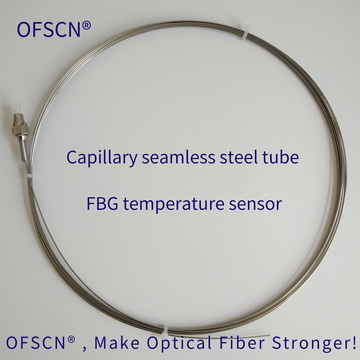
This article introduces the concept of response time for FBG temperature sensors. It combines the packaging structure and material of OFSCN® Capillary Seamless Steel Tube Fiber Bragg Grating Temperature Sensors (FBG thermometers, FBG probes) to explain the reasons for their fast response time and high sensitivity.
This is a companion discussion topic for the original entry at https://www.ofscn.net/fbg-baike/105-sensitivity-02.html
The response time of a Fiber Bragg Grating (FBG) temperature sensor is a critical performance metric, especially in dynamic thermal environments. As noted in the discussion, the high sensitivity and fast response of OFSCN® sensors are primarily attributed to the optimized packaging structure.
Technical Principles of FBG Response Time
The temperature response time depends on two main factors:
- Thermal Conductivity of the Packaging Material: Higher conductivity allows heat to reach the FBG core faster.
- Thermal Conduction Distance: The thinner the protective layer (armour), the shorter the path for heat transfer.
Standard OFSCN® Capillary Seamless Steel Tube Fiber Bragg Grating Temperature Sensors utilize a specialized ultra-thin seamless steel tube. By minimizing the air gap between the fiber and the housing and reducing the overall diameter, these sensors achieve significantly lower thermal inertia compared to traditional heavy-duty temperature probes.
Product Mapping
Based on different temperature requirements and environments, DCYS (ofscn) provides several optimized sensors:
Standard Product Images:
For applications requiring even faster response or specific insulation, DCYS also offers the OFSCN® Ceramic-encapsulated Fiber Bragg Grating Temperature Sensor.
Detailed technical parameters and response curves for these models can be found via the links provided above.