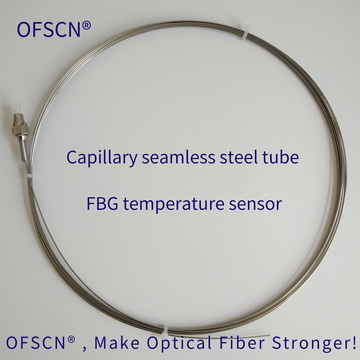
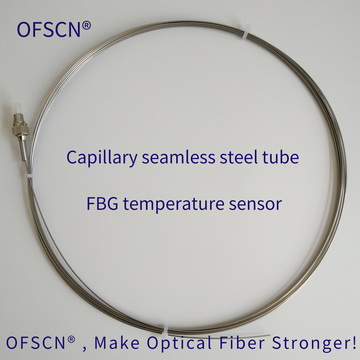
Product Alias: Cryogenic FBG Sensor,Ultra-low Temperature Fiber Optic Sensor,Liquid Helium Temperature Sensor,Liquid Nitrogen Temperature Sensor,Low Temp FBG Transducer,Cryogenic Fiber Optic Temperature Probe,FBG Cryogenic Sensor,Radiation Resistant FBG Sensor (for customized version),Distributed Cryogenic Sensor,Quasi-Distributed Temperature Sensor, Radiation-resistant FBG temperature sensor
This is a companion discussion topic for the original entry at https://www.ofscn.net/fbg-products/temperature-sensor-3k.html
This topic discusses the application of Fiber Bragg Grating (FBG) technology in cryogenic environments, specifically for monitoring liquid oxygen, liquid nitrogen, liquid hydrogen, liquid helium, and LNG.
Technical Overview: FBG at Ultra-Low Temperatures
In ultra-low temperature environments (near absolute zero), the thermal expansion coefficient of standard optical fibers becomes extremely small, leading to a significant decrease in temperature sensitivity for bare FBGs.
To overcome this, OFSCN® Cryogenic Fiber Bragg Grating Temperature Sensors utilize specialized material packaging that provides high thermal expansion at low temperatures. This amplification of the thermal strain ensures accurate temperature measurement even in liquid helium environments (down to approximately 3K-4K).
Product Features and Application
For cryogenic and radiation-resistant requirements, the following OFSCN® products are typically recommended based on the specific temperature range:
-
OFSCN® 300°C Fiber Bragg Grating Temperature Sensor
- Temperature Range: -200°C to +300°C.
- Packaging: Single-layer seamless steel tube (default 0.9mm OD).
- Suitability: Ideal for Liquid Nitrogen (-196°C) and LNG monitoring.
- Standard Images:
-
OFSCN® 500°C Fiber Bragg Grating Temperature Sensor
- Temperature Range: -200°C to +500°C.
- Suitability: Suitable for applications requiring a wider thermal cycle range while maintaining cryogenic performance.
- Standard Images:
Customization for Radiation Resistance
For aerospace or nuclear applications, we offer a Radiation-Resistant FBG Sensor version. This model utilizes specialized radiation-hardened fibers to prevent signal attenuation caused by “darkening” effects under high-energy particle exposure.
If you have a specific engineering scenario involving liquid helium or high-radiation environments, please specify the exact minimum temperature and the expected radiation dose (if applicable) so I can provide further technical guidance.