What are FBG Sensitivity Coefficients?

What are the standard values for temperature sensitivity (pm/°C) and strain sensitivity (pm/με)?

For Fiber Bragg Grating (FBG) sensors, temperature sensitivity and strain sensitivity are fundamental parameters that describe how the Bragg wavelength shifts in response to changes in temperature and strain, respectively.

Temperature Sensitivity (pm/°C):
The typical temperature sensitivity for a standard FBG operating around 1550 nm is approximately 10 to 12 pm/°C. This value can vary slightly depending on the type of optical fiber used and the FBG’s central wavelength.
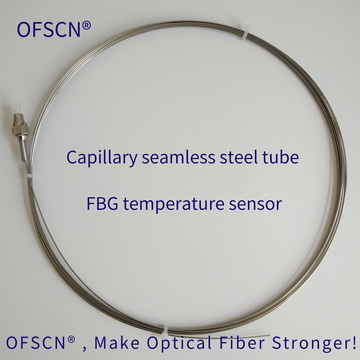
For example, our OFSCN® 300°C Fiber Bragg Grating Temperature Sensor utilizes this principle, with its temperature-wavelength calibration formula provided in terms of °C/pm.
Here are some standard image links for the OFSCN® 300°C Fiber Bragg Grating Temperature Sensor:


Strain Sensitivity (pm/με):
For a standard FBG operating around 1550 nm, the typical strain sensitivity is approximately 1.2 pm/με. This value also depends on the fiber’s material properties (specifically, its photoelastic coefficient) and the operating wavelength.
Our OFSCN Alloy Tube Packaged Fiber Bragg Grating strain sensor is designed to measure strain, with its sensing capabilities directly related to this sensitivity.
Here are some standard image links for the OFSCN Alloy Tube Packaged Fiber Bragg Grating strain sensor:


It’s important to note that these values are typically provided for specific FBG designs and operating conditions. For more detailed parameters, please refer to the specific product datasheets or contact us for customized FBG solutions.

1 个赞