If two patch cords are not long enough, what component can be used to join them together?
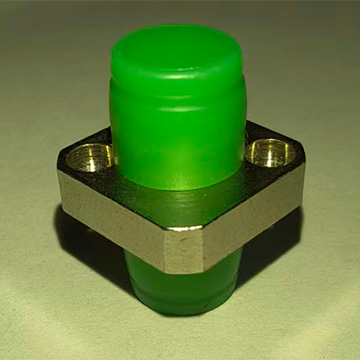
To join two patch cords together when they are not long enough, the specific component required is a Fiber Optic Coupler (also commonly referred to as a Fiber Optic Adapter or Flange).
Technical Principle
A fiber optic coupler is a passive component designed to align the cores of two fiber optic connectors (such as FC, SC, LC, or ST types) with high precision. This allows light to pass from one fiber to another with minimal loss.
The internal structure typically contains an Alignment Sleeve (usually made of ceramic or bronze) that ensures the ferrules of the connectors are perfectly centered against each other.
Recommended DCYS (OFSCN) Solution
For high-stability sensing and communication networks, we provide standard adapters that ensure low insertion loss and high repeatability.
OFSCN® Fiber Optic Couplers / Adapters
Standard Product Image:
Key Considerations for Selection:
- Connector Type: You must match the coupler to your patch cord connectors (e.g., FC to FC, or SC to LC for hybrid applications).
- Polishing Type: Ensure the coupler supports the correct ferrule polish, such as PC/UPC (usually blue/black) or APC (usually green), to maintain signal integrity.
- Fiber Type: Couplers are generally categorized as Single-mode (SM) or Multi-mode (MM) to match the internal alignment sleeve precision required for the fiber core size.
For more detailed technical specifications, you may visit:
OFSCN® Specialized Optical Fiber and Cable