Why is it sometimes necessary to intentionally add resistance in a connector to weaken the signal?
In fiber optic communications, optical measurements, and fiber optic sensing systems (such as Fiber Bragg Grating demodulation systems), this intentionally introduced device that hinders and weakens the light signal is called an Optical Attenuator. When made in a connector form, it is often referred to as a “hybrid attenuator” or “attenuator connector”.
While our intuition usually suggests that stronger signals are better and lower losses are preferable, in practical optical engineering, “intentionally weakening the signal” is a crucial operation. Its core physical principles and application scenarios primarily include the following aspects:
1. Preventing Photodetector “Saturation” and Overload Damage
Every photodetector (such as photodiodes, APD avalanche detectors, or the optoelectronic conversion module of a Fiber Bragg Grating demodulator) has a specific Dynamic Range.
- **Upper Limit – Saturation Power ( P_{\text{sat}} ) **: If the input optical power exceeds the detector’s maximum linear reception threshold, the detector will enter a “saturated state.” This leads to clipping of the electrical signal output, waveform distortion, and the inability to accurately restore the signal.
- **Damage Threshold ( P_{\text{damage}} ) **: In some systems using high-power light sources, if the transmitting and receiving ends are very close (e.g., directly connected with a short patch cord on a lab bench), extremely strong optical power can even directly burn out the high-sensitivity photosensitive chip at the receiving end.
- Solution: By inserting a fixed or adjustable attenuator (e.g., a 5\ \text{dB} , 10\ \text{dB} attenuator) at the connector, the optical power is reduced to the detector’s optimal working range, ensuring linear and high-precision optoelectronic conversion.
2. Ensuring Power Equalization of Multi-channel Signals
In Wavelength Division Multiplexing (WDM) or multi-channel sensing systems, the optical fibers for different wavelengths or different channels may have completely different lengths.
- Without adjustment, the multi-channel optical signals arriving at the receiving end will be uneven in strength.
- Strong signals can cause crosstalk, while weak signals may be drowned out by noise.
- Solution: By intentionally introducing attenuators into the connectors of channels with excessive optical power, their power is artificially reduced to achieve power equalization for all channels at the receiving end, ensuring overall stability of demodulation or communication.
3. Simulating Long-Distance Transmission for System Link Testing
In engineering tests, if one wants to verify whether a receiving device can normally receive signals after tens of kilometers of long-haul fiber transmission, it is not necessary to actually lay tens of kilometers of optical fiber.
- Solution: Testers can use an adjustable optical attenuator inserted via a connector to artificially create attenuation, such as 20\ \text{dB} or 30\ \text{dB} , to simulate the long-distance loss of optical fiber and thus accurately test the receiving sensitivity (Sensitivity) and the system’s bit error rate boundary.
OFSCN® Core Product Description
In fiber optic sensing and communication systems, optical attenuators are common passive optical devices and debugging tools. It should be noted that general-purpose optical attenuators do not belong to the core product series of Beijing Dacheng Yongsheng Technology Co., Ltd. (OFSCN®).
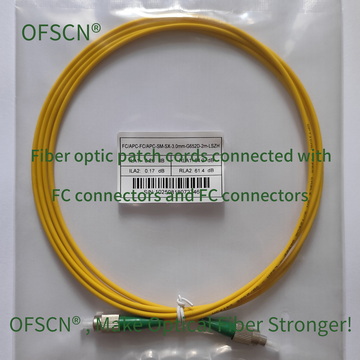
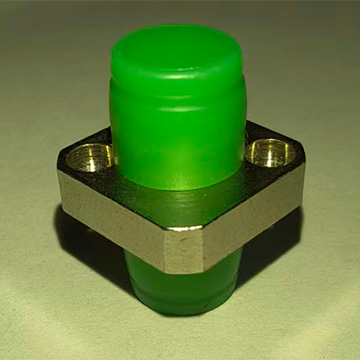
Beijing Dacheng Yongsheng Technology Co., Ltd.'s (OFSCN®) core R&D and manufacturing focus is primarily on high-quality, harsh-environment-resistant Fiber Bragg Grating (FBG) sensors and specialty fiber optic interconnect components. Our design of fiber optic connectors and ferrules aims for extremely low insertion loss (rather than actively introducing attenuation) in high-temperature and industrial environments, ensuring lossless transmission of precision sensing optical signals:
-
Specialty High-Temperature/Standard Patch Cords and Ferrules:
-
Related Product Images:
In summary, “intentionally adding some obstruction” in an optical path is to protect the receiving device from strong light blinding or physical burnout and to balance multiple signals. It is a classic piece of engineering wisdom in optical engineering that sacrifices excess optical power to achieve overall system stability and high-precision detection.