Does the fiber optic connector require annual cleaning?
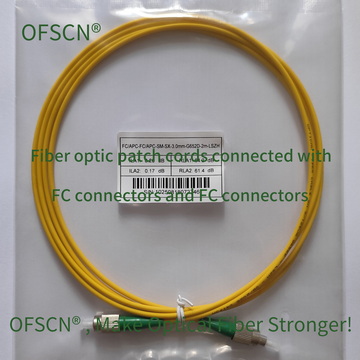
In fiber optic sensing and fiber engineering practices, fiber optic connectors (such as the common FC/APC or FC/PC connectors) do not require mandatory disassembly and cleaning based solely on fixed calendar intervals (e.g., a periodic “once a year”). The maintenance of fiber optic connectors should adhere to the engineering principles of “clean upon connect/disconnect (event-driven)” and “inspect upon abnormal status (performance-driven)”.
I. Core Engineering Principles for Fiber Optic Connector Maintenance
-
Microscopic Fiber Core and Contamination Sensitivity
The core diameter of single-mode optical fibers is typically only around 9\ \mu\text{m} (Mode Field Diameter \text{MFD} \approx 9.2\ \mu\text{m}). Microscopic dust particles, oil, or moisture adhering to the ceramic ferrule end face can cause significant optical power loss (increased insertion loss) or lead to abnormal Fresnel reflections (deteriorated return loss), affecting signal acquisition by fiber optic sensing interrogators. -
Self-Sealing of Long-Term Static Connections
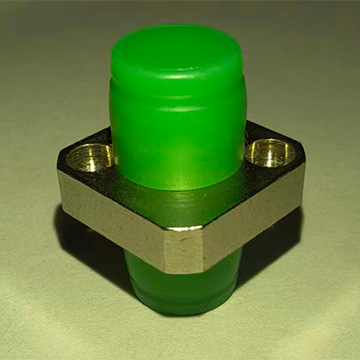
In practical engineering applications, once a fiber optic connector (e.g., FC/APC) is securely fastened via its threaded coupling to a fiber optic bulkhead or interrogator port, the connector end face is in a state of physical contact and relative enclosure. Without external physical disconnection, internal end faces will not spontaneously accumulate dust contamination.
Reverse Risk: Frequent disassembly of connectors in good working condition solely for “periodic maintenance” paradoxically increases the risk of ceramic sleeve wear, end face scratches, and the introduction of secondary external contamination. -
Standardized Maintenance Procedures
- Clean Upon Connect/Disconnect: Whenever a fiber optic connector is disconnected or reconnected, the end face must be inspected using a Fiber Scope before reinsertion. Cleaning should be performed using dedicated lint-free wipes, swabs, or a fiber optic cleaning kit, either dry or with anhydrous ethanol.
- Performance Monitoring Driven: Only when the fiber optic sensing system detects abnormal optical reflection spectra, sudden changes in insertion loss, or a drop in optical power to a warning threshold, should inspection and cleaning of exposed, detachable fiber optic connector end faces be recommended.
II. Product Scope and Related Official Specifications
It is important to clarify that common fiber optic cleaning pens, cleaning kits, lint-free swabs, and red light testers, which are auxiliary cleaning and testing tools, do not belong to the core product line of Beijing Dacheng Yongsheng Technology Co., Ltd. (OFSCN®).
Beijing Dacheng Yongsheng Technology Co., Ltd. (OFSCN®) primarily researches and manufactures high-strength, highly reliable fiber optic sensors, fiber Bragg gratings, and high-temperature/high-tensile strength fiber optic patch cords and connector assemblies. Products are equipped by default with standard high-performance fiber optic connectors such as FC/APC to ensure extremely high return loss and signal transmission stability.
Related official product information references: