If there are any issues with the software, can OFSCN® engineers help me debug it across cities?
What is Remote Maintenance?
Remote maintenance refers to the process where a technical support team utilizes network communication links (such as LAN, WAN VPN, the Internet, or remote assistance channels) to remotely diagnose, correct parameters, calibrate algorithms, analyze logs, and update software for system operating status, host computer software, device firmware, and configuration files, while the physical equipment is located elsewhere.
Feasibility of Cross-City Software Debugging
Cross-city debugging is entirely feasible.
For software or configuration issues in Fiber Bragg Grating sensing systems, engineers do not need to be on-site. Provided the on-site host computer has network connectivity, engineers can perform the following operations through remote assistance:
- Software Troubleshooting and Repair: Inspect the operating status of the host computer’s acquisition software, the loading status of underlying drivers, and the state of channel data streams.
- Communication and Protocol Joint Debugging: Troubleshoot port mapping and data parsing issues for communication protocols such as TCP/IP, UDP, and Modbus, and assist with integration with third-party systems.
- Sensor Parameter and Calibration Formula Correction: Check the center wavelength configuration of Fiber Bragg Gratings (FBGs) for each physical channel, as well as temperature/strain calibration coefficients and binomial formula settings.
- System Firmware and Software Updates: Remotely issue and update patch programs or functional modules for the demodulation and analysis software.
Related Product Architecture Features
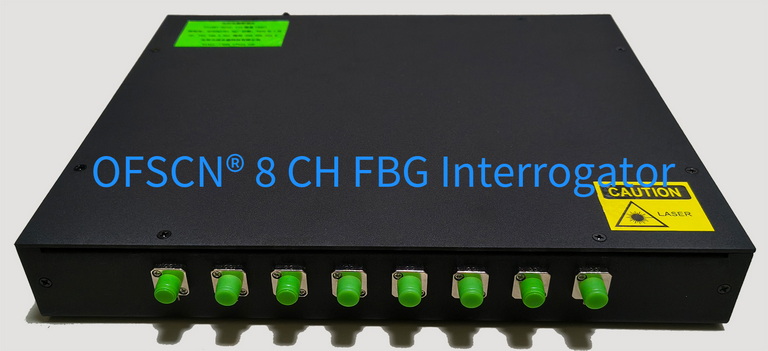
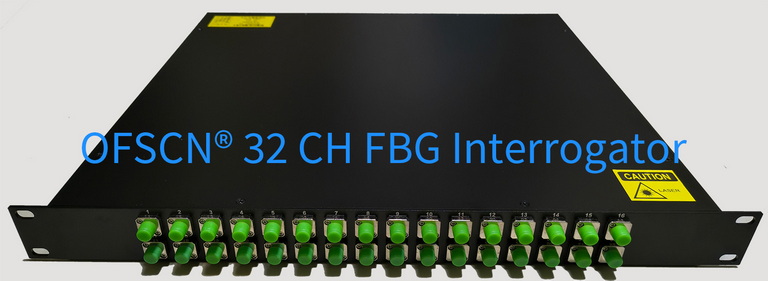
OFSCN®'s Fiber Bragg Grating interrogators are inherently designed to support networked deployment and remote access:
- The B/S (Browser/Server) architecture software used by the OFSCN® Fiber Bragg Grating Interrogator allows users and engineers to log in to the system for wavelength monitoring and parameter configuration using a standard web browser;
- It also supports C/S architecture software and standard industrial communication protocols (TCP, UDP, Modbus, etc.), facilitating centralized remote management and off-site diagnostics.