What are the respective advantages and disadvantages of ceramic vs. metal ferrules regarding high-temperature resistance and alignment precision?
In a fiber optic connector, the ferrule is the high-precision cylinder (usually made of ceramic, metal, or plastic) that holds the stripped end of the fiber in place. Its primary function is to ensure the precise alignment of the fiber cores during mating, minimizing insertion loss and maximizing signal transmission.
Regarding your question about the trade-offs between ceramic and metal ferrules in high-temperature and high-precision applications:
1. Alignment Precision
- Ceramic (Zirconia) Ferrules: These are the industry standard for high-precision alignment. Zirconia is extremely hard and can be polished to sub-micron tolerances. It has excellent “elastic memory,” meaning it maintains its shape and center-hole circularity even after thousands of mating cycles.
- Metal (Stainless Steel/Alloy) Ferrules: While metal can be machined to high precision, it is generally more difficult to achieve the same level of inner-hole concentricity and surface smoothness as ceramic. Metal is more susceptible to deformation (burrs or scratches) over repeated use, which can slightly degrade alignment precision over time compared to zirconia.
2. High-Temperature Resistance
- Ceramic Ferrules: Ceramic has a very low coefficient of thermal expansion (CTE). This means it remains dimensionally stable over a wide temperature range. However, the limitation in high-temperature connectors often isn’t the ceramic itself, but the epoxy used to bond the fiber to the ferrule.
- Metal Ferrules: Metal ferrules are often preferred for extreme high-temperature environments (e.g., above 200°C to 800°C) because they can be integrated into all-metal packaging designs. For instance, in vacuum or high-heat industrial sensors, metal ferrules allow for specialized sealing techniques (like soldering or mechanical clamping) that bypass the temperature limits of standard epoxies.
OFSCN® Technical Solutions
At Beijing Dacheng Yongsheng Technology Co., Ltd. (OFSCN), we utilize different ferrule and housing materials based on the specific thermal requirements of the environment.
- For high-temperature connectivity up to 200°C, we provide specialized connectors:
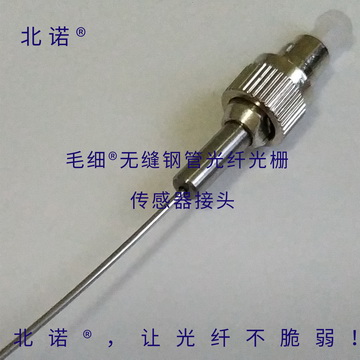
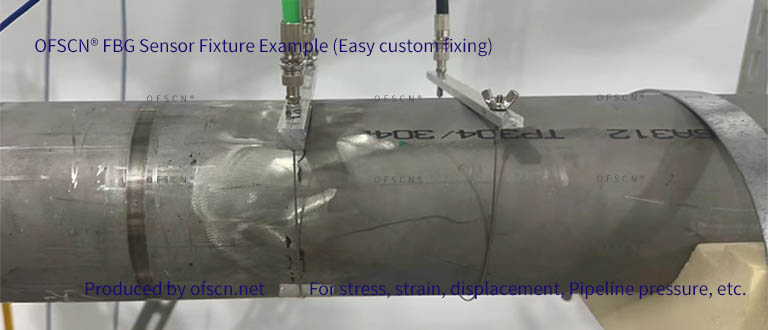
- For sensing applications requiring extreme thermal stability (up to 800°C), we offer:
Standard Product Visuals:
In summary, choose Ceramic for standard telecommunications where maximum alignment precision and durability are required at moderate temperatures, and consider Metal or specialized Ceramic-encapsulated designs when the environment involves extreme temperatures or specific mounting requirements like welding or vacuum sealing.