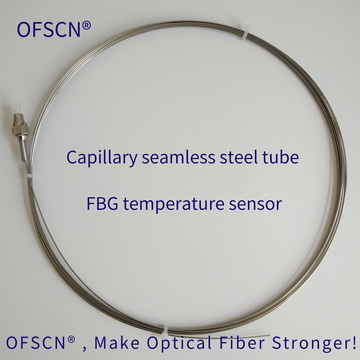
Product Alias: OFSCN 300℃ FBG Temperature Sensor, High-Temperature Fiber Optic Sensor, Industrial FBG Thermometer, Seamless Stainless Steel FBG Sensor, Polyimide Fiber Temperature Sensor, Quasi-Distributed Temperature Sensor, Single-Point FBG Temperature Probe, Fiber Optic Grating Sensor, Temperature Monitoring FBG, Corrosion-Resistant FBG Sensor.
This is a companion discussion topic for the original entry at https://www.ofscn.net/fbg-products/temperature-sensor-300
Welcome to the OFSCN® Technical Inquiry & Product Q&A section.
Based on the product details for the OFSCN® 300°C Fiber Bragg Grating (FBG) Temperature Sensor, here is a summary of the technical specifications and characteristics:
Technical Overview
The OFSCN® 300°C Fiber Bragg Grating Temperature Sensor is designed for industrial temperature monitoring in environments ranging from -200°C to +300°C. It utilizes a specialized seamless stainless steel tube encapsulation to ensure durability and precision.
Key Specifications:
- Encapsulation: Single-layer seamless stainless steel tube.
- Diameter: Standard 0.9 mm (customizable down to 0.5 mm).
- Fiber Type: High-temperature polyimide-coated fiber.
- Capacity: Supports single-point or multi-point (quasi-distributed) sensing. When used with a 40nm bandwidth interrogator, it is recommended to have no more than 10 sensing points per string.
- Connector Type: Default FC/APC (ST, LC, SC, and PC polishing available upon request).
Product Visuals
Application Compatibility
This sensor is ideal for applications requiring corrosion resistance and high-temperature stability where traditional electronic sensors might fail. It is fully compatible with OFSCN® Fiber Bragg Grating Interrogators.
If you have specific technical requirements regarding the spacing of measurement points or environmental constraints, feel free to provide further details for a technical evaluation.