This article introduces the principles of distributed optical fiber sensing technology, as well as the concepts of Raman scattering, Rayleigh scattering, and Brillouin scattering. The principles of fiber optic grating sensing technology are also described, and the differences between these two technologies are compared. This lays the foundation for understanding the usage environments and how to choose between distributed optical fiber sensors and fiber optic grating sensors.
This is a companion discussion topic for the original entry at https://www.ofscn.net/fbg-baike/293-principle-difference.html
Thank you for sharing this comprehensive overview regarding the technical distinctions between distributed fiber optic sensing and Fiber Bragg Grating (FBG) sensing.
As a supplement to the principles of Raman, Rayleigh, and Brillouin scattering mentioned, it is important to note that the choice between these technologies often depends on the required spatial resolution and the physical layout of the monitoring target.
Technical Comparison and DCYS (ofscn) Solutions
While distributed sensing offers continuous measurement along the entire fiber length, FBG technology provides higher precision and faster refresh rates at specific discrete points.
Based on these principles, Beijing Dacheng Yongsheng Technology Co., Ltd. (OFSCN) provides specialized sensors optimized for both technologies:
-
For Distributed Fiber Sensing (DTS/OFDR/BOTDA):
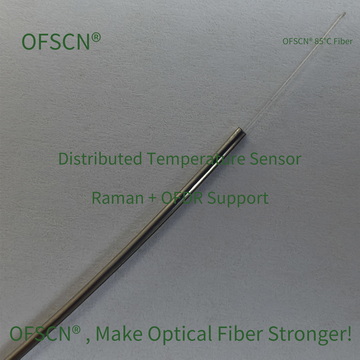
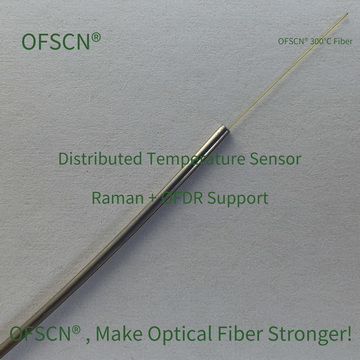
If the application requires continuous temperature monitoring (e.g., long-distance pipelines or power cables), we offer the OFSCN® Distributed Fiber Temperature Sensor series. These are encapsulated in seamless stainless steel tubes to protect the fiber in harsh environments.
- OFSCN® 85°C Distributed Fiber Temperature Sensor
- OFSCN® 300°C Distributed Fiber Temperature Sensor
- OFSCN® 700°C Distributed Fiber Temperature Sensor (Metal-coated fiber for extreme heat)
Product Visuals:
https://www.ofscn.org/images/09/20260214-360/OFSCN-OFDR-DTS-Temperatur-09-02.jpg
https://www.ofscn.org/images/09/20260214-360/OFSCN-OFDR-DTS-Temperatur-09-05.jpg
-
For Fiber Bragg Grating (FBG) Sensing:
If the application requires high-accuracy point measurement or vibration/strain sensing, FBG sensors are the standard choice.
Product Visuals:
https://www.ofscn.net/images/49/240125-768/BNYB-MX-49-FC-danduan-fix01.jpg
Which one to choose?
- Choose Distributed Sensing if you need to detect the exact location of a leak or fire over several kilometers where the specific “hot spot” is unknown.
- Choose FBG Sensing if you need high-frequency data, extreme precision at known critical points, or if you need to measure multiple parameters (strain, pressure, temperature) on a single fiber string with high sensitivity.
For further technical specifications, you may refer to: