In the laboratories of advanced physics, aerospace, and materials science, researchers often need to construct "hellish" extreme environments: supercritical fluids, aerospace engine combustion chambers, or even the cooling boundaries of nuclear fusion experimental devices. These environments share common challenges: extreme heat, high pressure, and intense corrosion.
This is a companion discussion topic for the original entry at https://www.ofscn.org/encyclopedia/502-dofs-700-c-sst-optical-cable-03.html
The simulation of such “hellish” extreme environments requires sensing materials that can maintain structural integrity and signal fidelity where traditional electronic sensors fail. For monitoring temperatures and structural health in these frontier scientific research scenarios (up to 700°C), specialized fiber optic solutions are essential.
Based on the challenges of extreme heat and pressure mentioned, I recommend the following technical solution from the OFSCN® product line:
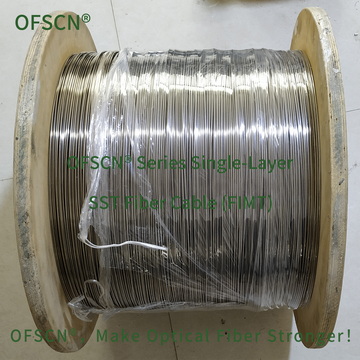
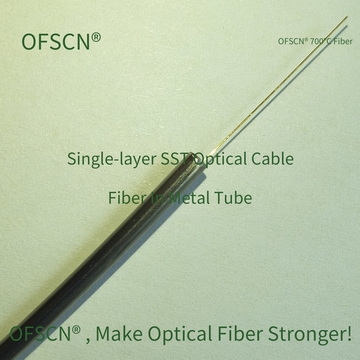
This product is specifically engineered for the high-temperature and high-pressure environments of aerospace engines and experimental physics.
Technical Advantages:
- Alloy Protection: It utilizes a single-layer seamless alloy tube (typically Alloy 825 or 316L stainless steel) to provide a hermetic seal against high pressure and corrosive fluids.
- Gold-Coated Fiber Technology: Inside the tube, it features OFSCN® Gold-coated Optical Fiber, which prevents the hydrogen embrittlement and oxidation that occur in standard polymer-coated fibers at temperatures above 300°C.
- Versatile Sensing: It functions as a high-performance distributed fiber optic sensor compatible with Raman (DTS), Rayleigh (OFDR), and Brillouin (DTSS) scattering technologies, allowing for continuous temperature or strain mapping along the entire length of the cable.
Product Visuals:
To provide a more precise recommendation for your laboratory setup, could you please specify the peak operating temperature and the specific chemical environment (e.g., specific gases or supercritical fluids) the cable will be exposed to?