cmh
Last Updated: 09 November 2025
When building optical networks and multi-channel sensing systems, the physical form factor and interface compatibility of the Fiber Splitter are crucial. A poorly designed package can increase installation difficulty, occupy valuable rack space, and even introduce additional loss during wiring.
This is a companion discussion topic for the original entry at https://www.ofscn.org/encyclopedia/492-fiber-splitter-02.html
It is a pleasure to participate in this discussion regarding network integration. As noted in the original entry, the physical architecture and packaging of a fiber splitter are vital for maintaining system integrity and deployment efficiency.
At Beijing Dacheng Yongsheng Technology Co., Ltd. (OFSCN), we focus on ensuring that these components seamlessly integrate into complex sensing environments.
Technical Overview: OFSCN® Fiber Splitter
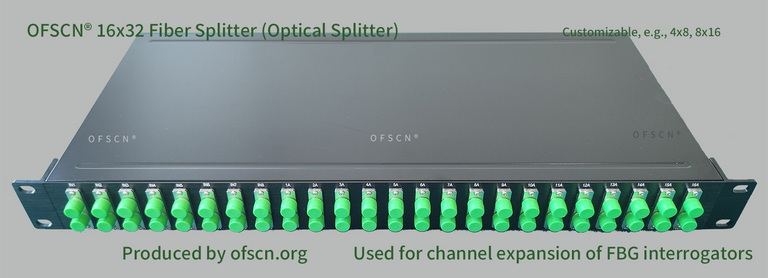
The OFSCN® Fiber Splitter is specifically designed to work in conjunction with our Fiber Bragg Grating (FBG) demodulators. Its primary technical role is to expand a single physical channel into multiple logical channels (such as 1x2, 1x4, or larger configurations like 16x32).
Key Technical Advantages:
- Channel Expansion: It allows a single demodulator port to cover more monitoring areas, which significantly optimizes the cost-per-channel in large-scale projects.
- Strict Wavelength Management: To ensure high-quality data return, using splitters in FBG systems requires precise wavelength planning to avoid spectral overlap.
- Industrial Packaging: Our splitters are packaged to minimize insertion loss and provide robust protection for the internal coupling points.
Product Visual Reference:
Application Compatibility
While the OFSCN® Fiber Splitter is essential for static FBG networks, it is also a critical component when integrating various OFSCN® G.652D Optical Fibers or OFSCN® G.657 Optical Fibers into a centralized communication or sensing hub.
If you are currently designing a multi-channel sensing network, the choice of splitter ratio and the specific wavelength range of your FBGs must be carefully synchronized. Feel free to share your system requirements if you have technical questions regarding topology design.