cmh
Last Updated: 11 November 2025
The Fiber Optic Adapter is seemingly the simplest component in a fiber link, yet its position in the overall system is critical. The quality of the adapter directly determines the connection's Insertion Loss (IL) and long-term reliability. In highly demanding fields such as fiber sensing, data centers, and industrial control, the accumulation of even minor loss can lead to system failure.
This is a companion discussion topic for the original entry at https://www.ofscn.org/encyclopedia/493-fiber-optic-adapter-01.html
This is a professional technical summary regarding the critical role of fiber optic adapters in high-precision systems.
The quality of a Fiber Optic Adapter is indeed paramount. In high-performance fiber optic sensing and data communication, the core challenge lies in maintaining precise sub-micron alignment between two fiber cores.
From a technical perspective, the performance of an adapter—specifically its Insertion Loss (IL) and Return Loss (RL)—is primarily dictated by two factors:
- Alignment Sleeve Material: High-precision adapters typically utilize zirconia (ceramic) sleeves rather than phosphor bronze. Zirconia provides superior elasticity and thermal stability, ensuring that the alignment remains consistent even after hundreds of mating cycles.
- Mechanical Tolerance: The internal diameter of the sleeve and the housing must be manufactured to extremely tight tolerances. Any eccentricity or angular misalignment will significantly increase dB loss, which is particularly detrimental in Fiber Bragg Grating (FBG) sensing networks where signal integrity is vital for accurate wavelength demodulation.
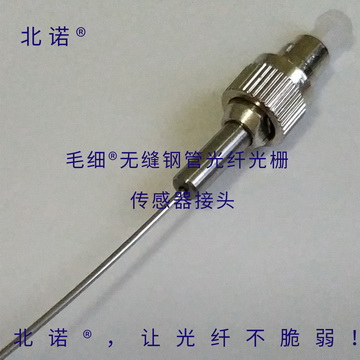
For applications requiring enhanced durability or specific environmental resistance, OFSCN offers specialized connectivity solutions, including:
These components are designed to work in tandem with high-quality adapters to ensure system-level reliability in demanding industrial environments.
If you have specific requirements regarding the mechanical housing or the operating temperature range for your fiber optic link, feel free to discuss the technical parameters here.