Iven | www.ofscn.net
Last Updated: 05 January 2024
This article introduces the working temperature range of the OFSCN® 100°C Capillary Seamless Steel Tube Fiber Bragg Grating (FBG) temperature sensor (FBG thermometer), including its maximum high-temperature endurance and maximum low-temperature values. It also describes the methods and principles for determining the working temperature range of fiber bragg grating temperature sensors (including the stainless steel materials used and the FBG written using ultraviolet lithography).
This is a companion discussion topic for the original entry at https://www.ofscn.net/fbg-baike/112-temperature-range-100.html
This topic provides an excellent overview of the standard temperature limitations for capillary seamless steel tube FBG sensors.
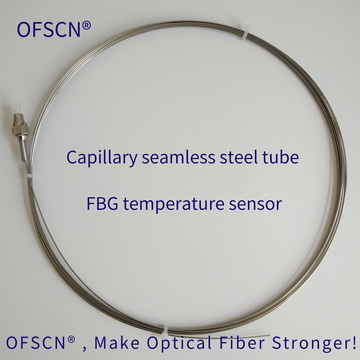
For technical clarity, it is important to distinguish between the physical limits of the fiber itself and the limits imposed by the packaging materials. The OFSCN® 100°C Fiber Bragg Grating Temperature Sensor is specifically optimized for high-precision measurements within the -40°C to +100°C range, utilizing a robust single-layer seamless steel tube design.
Key Technical Features of this Range:
- Packaging: Single-layer seamless steel tube (standard 0.9mm OD, customizable to 0.6mm).
- Calibration: For this 100°C variant, the temperature-wavelength relationship is typically linear (first-order polynomial), providing high stability for industrial monitoring.
- Scalability: These sensors can be produced with a single sensing point or as a multi-point array. When used with a 40nm bandwidth interrogator, a single sensor string can accommodate up to 20 sensing points.
Product Visuals:
While the article focuses on the 100°C threshold, it is worth noting that for applications exceeding these limits—such as power plant monitoring or aerospace testing—different FBG writing techniques and packaging materials are required to prevent grating “washout” or material degradation. OFSCN offers specialized solutions for higher gradients, including:
If you have specific environmental requirements or need advice on selecting the appropriate thermal rating for your project, feel free to share your operating conditions.