Iven | www.ofscn.net
Last Updated: 05 January 2024
This article introduces the working temperature range of the OFSCN® 300°C Capillary Seamless Steel Tube Fiber Bragg Grating (FBG) temperature sensor (FBG thermometer), including its maximum high-temperature endurance and maximum low-temperature values. It also describes the methods and principles for determining the working temperature range of fiber Bragg grating temperature sensors (including the stainless steel materials used and the femtosecond fiber bragg grating).
This is a companion discussion topic for the original entry at https://www.ofscn.net/fbg-baike/113-temperature-range-300.html
The temperature range of a Fiber Bragg Grating (FBG) sensor is primarily determined by its encapsulation material and the writing process of the grating itself.
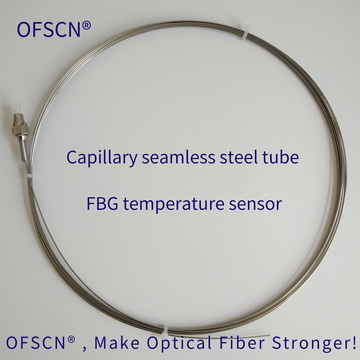
As mentioned in the technical overview, the OFSCN® 300°C Fiber Bragg Grating Temperature Sensor utilizes seamless steel tube packaging and high-temperature resistant gratings to achieve stable performance across a wide thermal spectrum.
Technical Performance Highlights:
- High Temperature Limit: Up to +300°C. For environments exceeding this, specialized gratings (such as femtosecond gratings) and enhanced metal packaging are required to prevent signal decay or mechanical failure.
- Low Temperature Limit: Down to -200°C. The seamless steel tube design ensures structural integrity even under cryogenic conditions.
- Packaging Advantage: The use of capillary seamless steel tubes provides excellent protection against mechanical stress while maintaining high thermal sensitivity.
Product Visualization:
Extended Temperature Solutions:
Depending on your specific application requirements, OFSCN offers different tiers of thermal resistance:
Detailed technical specifications and calibration formulas (usually binomial for high-precision 300°C models) can be found at the links above.