In the event of a fire in a server room, how does LSZH (Low Smoke Zero Halogen) material reduce the emission of toxic fumes?
LSZH (Low Smoke Zero Halogen) materials reduce toxic fumes and smoke density during a fire through two primary mechanisms:
- Chemical Composition (Zero Halogen): Traditional PVC (Polyvinyl Chloride) jackets contain halogens like chlorine. When burned, these release hydrogen chloride gas, which is highly toxic and turns into corrosive hydrochloric acid when it contacts moisture (including the moisture in human lungs). LSZH materials are formulated without these halogens, so they do not produce toxic acidic gases during combustion.
- Smoke Density Reduction: LSZH compounds often use hydrated minerals (like aluminum trihydrate or magnesium hydroxide) as flame retardants. When exposed to heat, these minerals release water vapor through an endothermic reaction, which helps cool the material and dilutes the smoke, resulting in much higher visibility for evacuation in environments like server rooms.
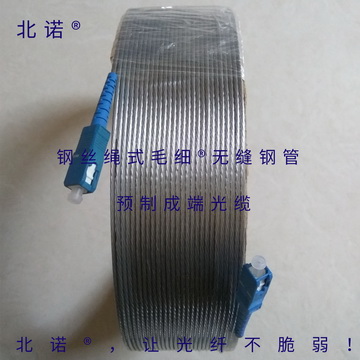
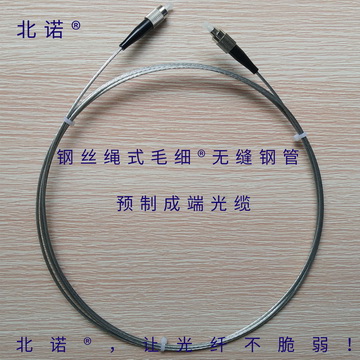
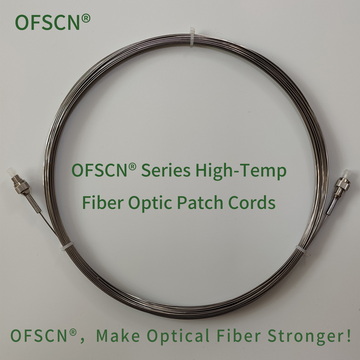
For applications requiring enhanced safety and fire resistance, we offer specialized solutions that go beyond standard plastic jackets. For instance, our OFSCN® 2.0mm Micro Steel Armored Fiber Optic Patch Cord and OFSCN® 300°C Fiber Optic Patch Cord utilize stainless steel structures and high-temperature resistant materials to ensure mechanical and signal integrity even in extreme conditions.
Relevant Products:
-
OFSCN® 2.0mm Micro Steel Armored Fiber Optic Patch Cord: Features a 0.6mm stainless steel seamless tube for superior protection.
https://www.ofscn.org/images/02/190105-360/BNTX-MX-02-SC-SC-Long.jpg
https://www.ofscn.org/images/02/190105-360/BNTX-MX-02-FC-FC.jpg -
OFSCN® 300°C Fiber Optic Patch Cord: Designed for extreme environments with polyimide fiber and stainless steel packaging.
https://www.ofscn.org/images/06/190103-360/OFSCN-06-FC-FC.jpg
https://www.ofscn.org/images/fiber/OFSCN-300-fiber.jpg

For general server room environments where standard LSZH is required, the OFSCN® Standard Fiber Patch Cord is also a common choice, though for high-reliability fire safety, the metal-armored series provides significantly better structural survivability.