In the event of a server room fire, could the patch cords act as a “fuse” that helps the flames spread?
In standard environments, fiber optic patch cords using plastic jackets (such as PVC or LSZH) can indeed become a potential path for fire spread if they do not meet strict flame-retardant ratings (like UL94 V-0 or OFNR/OFNP).
From a technical perspective, to prevent a “fuse” effect in high-risk environments like server rooms or industrial facilities, the materials used in the optical fiber’s coating and the cable’s jacket are critical.
1. The Role of Materials
Conventional plastic-jacketed cables can melt or burn, contributing to fire load. To mitigate this risk, specialized materials are used:
- Flame Retardant (FR): These materials are designed to resist ignition and stop burning once the heat source is removed.
- Low Smoke Zero Halogen (LSZH): In a fire, these reduce the emission of toxic gases and thick smoke, which is vital for visibility and safety in server rooms.
2. OFSCN® High-Safety Solutions
For environments where fire safety and extreme temperature resistance are paramount, OFSCN (Beijing Dacheng Yongsheng Technology Co., Ltd.) provides specialized products that utilize metal encapsulation and high-performance polymers, which offer superior safety compared to traditional plastic patch cords.
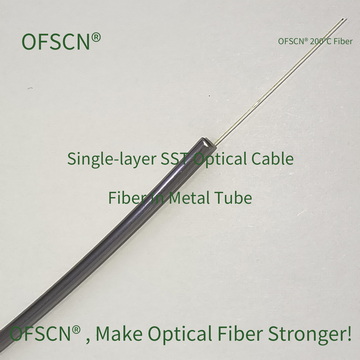
- Seamless Steel Tube Protection: Our cables often use 304 or 316L stainless steel seamless tubes. Unlike plastic jackets, these metal tubes are non-combustible and provide a physical barrier that prevents the optical fiber inside from acting as a conduit for flames.
- High-Temperature Coatings: We use polyimide or gold coatings instead of standard acrylates. These materials have significantly higher thermal stability.
Recommended Products for Critical Environments:
If you are concerned about fire safety and thermal durability, consider these metal-protected solutions:
-
OFSCN® 200°C Fiber Optic Patch Cord
Encapsulated in 0.9mm stainless steel seamless tubes, providing both mechanical protection and fire resistance.
-
OFSCN® 200°C Seamless Steel Tube Fiber Cable
Ideal for sensing or communication in harsh environments, utilizing non-combustible steel cladding.

In summary, while traditional patch cords could potentially spread flames if not correctly rated, choosing metal-encapsulated or high-temperature rated fibers eliminates this risk by using materials that do not support combustion.