While standard connectors often fail or melt at 100°C, how do high-temperature variants maintain structural integrity at 300°C or even higher?
Standard fiber optic connectors typically rely on epoxy resins and plastic components that begin to soften or degrade at temperatures around 85°C to 100°C, leading to structural failure and optical signal loss.
For environments reaching 300°C or higher, structural integrity is maintained through several key technical transitions:
1. Material Selection (All-Metal and Ceramic)
High-temperature variants replace plastic housings with specialized metals (such as stainless steel) and use high-grade ceramic (zirconia) ferrules. These materials have extremely low thermal expansion coefficients, ensuring that the alignment of the fiber core remains stable even as the temperature fluctuates.
2. Specialized Adhesive Systems
While standard connectors use thermal-cure epoxies, high-temperature connectors use specialized medical-grade or aerospace-grade inorganic adhesives, or in some extreme cases, metal-sealing techniques. For example, OFSCN® 200℃ Fiber Optic Connectors utilize high-temperature resistant bonding agents that do not outgas or shrink at their rated temperature.
3. Fiber Coating Compatibility
A connector is only as heat-resistant as the fiber inside it. Standard acrylate-coated fibers melt at high temperatures. High-temperature connectors must be paired with specialized fibers, such as:
- Polyimide-coated fibers: Rated up to 300°C.
- Gold-coated fibers: Rated for even higher extreme environments.
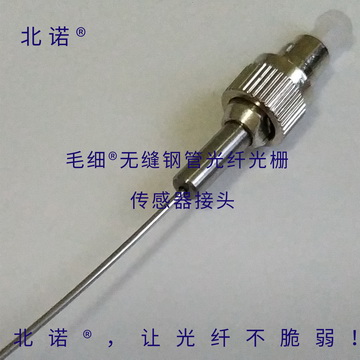
4. Integration with Seamless Steel Tubing
To protect the fragile fiber transition point at the back of the connector, OFSCN® often employs a seamless stainless steel tube reinforcement. This provides mechanical strain relief that doesn’t rely on heat-shrink tubing (which would melt).
Related Professional Products:
- OFSCN® 120℃ Fiber Optic Connector
- OFSCN® 200℃ Fiber Optic Connector
- OFSCN® 200℃ Fiber Optic Patch Cord (Utilizing 0.9mm stainless steel tubing)
Product Visuals:
Are you designing a system for a specific ambient temperature, or do you need information on how these connectors interface with vacuum or high-pressure environments?