Why must the end face be observed with a magnifying glass for scratches before plugging and unplugging the connector?
In the fields of optical engineering and fiber optic communication, the cleanliness and integrity of fiber optic physical end faces play a decisive role in the overall transmission quality of the optical path and the lifespan of components. Before plugging and unplugging fiber optic connectors, observe them using a fiber end face inspector (magnifier). The core physical and engineering reasons are as follows:
1. Microscopic Nature of Core Size and Optical Transmission Obstruction
The core diameter of single-mode optical fibers is extremely small. For example, standard OFSCN® G.652D Optical Fiber or OFSCN® G.657 Optical Fiber have a core diameter of only about 9 micrometers.
- Light Scattering and Absorption: Micron-sized dust, skin oils, water stains, or minor scratches, if located within the core area, will cause severe scattering and reflection of the light beam.
- Degradation of Insertion Loss (IL) and Return Loss (RL): This introduces extremely high insertion loss (signal attenuation) and worsens return loss (increased light reflected back to the source), thereby reducing the system’s signal-to-noise ratio and even interfering with the normal operation of the laser or demodulator.
2. Permanent Mechanical Damage under Physical Contact
The docking mechanism of fiber optic connectors (such as FC/PC, FC/APC, etc.) relies on the physical contact of the precision ceramic ferrule end face, which applies continuous axial pressure through the internal spring of the connector.
- Particulate Abrasion Effect: If the end face is contaminated with hard dust particles (e.g., silica, environmental metal debris), these hard particles act as “abrasives” when the two end faces are pressed together. They will be forcefully pressed into the quartz glass end face, causing irreparable scratches, pits, or even chipping.
- Cross-Contamination and Double Damage: This mechanical damage not only damages the contaminated connector itself but also directly scratches the end face of the clean connector on the other side during mating, causing cascading damage.
3. Risk of Thermal Burn-out in High-Power Systems
In fiber optic lasers or high-power sensing systems, the photon density is extremely high. If the end face has stains or scratches, these areas will strongly absorb photon energy, generating localized intense heat accumulation. This can cause the fiber optic end face to experience “burn-back” or complete melting in an extremely short period.
DASAN YongSheng (OFSCN®) Core Product Information
It should be clearly stated that the fiber end face inspector (or end face magnifier) is a general tool for fiber optic maintenance and inspection and is not part of DASAN YongSheng (OFSCN®)'s core product line.
However, as experts in precision optical transmission and extreme environment sensing, DASAN YongSheng (OFSCN®) provides core connector, patch cord, and adapter products that meet extremely high standards. DASAN YongSheng conducts rigorous end face interferometry and defect detection on all outgoing products to ensure their geometric shape and cleanliness fully comply with industrial and research-grade standards.
Below are the core products related to precision connection from DASAN YongSheng (OFSCN®):
-
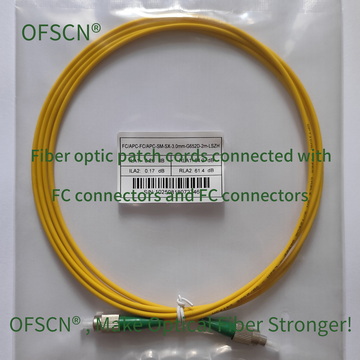
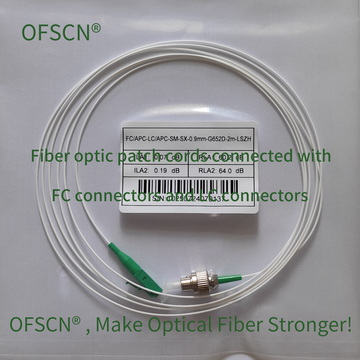
OFSCN® Standard Fiber Patch Cord:
Utilizes high-precision ceramic ferrules and high-quality fiber encapsulation, ensuring excellent end face consistency. The default fiber type is OFSCN® G.652D single-mode fiber.
-
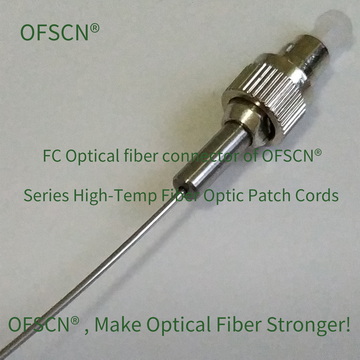
DASAN YongSheng (OFSCN®) High-Temperature Fiber Optic Connector Series:
Developed for harsh temperature environments, ensuring the ferrule does not deform under alternating hot and cold conditions, thus maintaining physical contact performance long-term. -
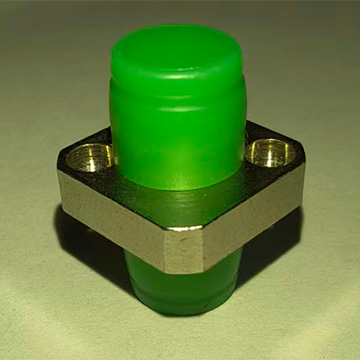
OFSCN® High Temperature Resistant Fiber Optic Adapter:
Offers a maximum temperature resistance of 300℃ and features a high-precision alignment sleeve to ensure perfect, non-damaging physical alignment of the connector end faces on both sides.