Why is the core component of this demodulator so much more expensive than a regular laser?
The Tunable Laser Source / Swept Laser Source used in Fiber Bragg Grating (FBG) interrogators, particularly those employing a wavelength-swept architecture, has a manufacturing cost and technical barrier far higher than ordinary fixed-wavelength lasers (like standard FP or fixed-wavelength DFB lasers) used in mass applications within the telecommunications industry.
This is primarily due to the extreme complexity in its physical structure, tuning control mechanisms, wavelength reference calibration, and precision packaging processes:
1. Precision of Dynamic Optical Microcavity and Tuning Mechanisms
Ordinary semiconductor lasers have fixed resonant cavity dimensions and output wavelengths. However, tunable lasers for fiber optic sensing interrogators need to achieve fast, continuous, or discrete linear frequency sweeps over a bandwidth of tens of nanometers (e.g., the classic C-band: 1525\text{ nm} to 1565\text{ nm}).
- External Cavity Structures and Micro-Electro-Mechanical Systems (MEMS/ECL): These typically require micro/nano-scale grating reflectors, piezoelectric actuators (PZT), or MEMS movable mirrors to dynamically and precisely adjust the optical cavity length at sub-micrometer levels.
- Mode-hop Free Tuning: During wide spectral tuning, it is crucial to ensure the laser maintains single longitudinal mode output and eliminates mode hops. This imposes extremely high synergistic mechanical and optical demands on the cavity structure design and micro-actuator precision.
2. Picometer (\text{pm}) Level Wavelength Accuracy and Ultra-Narrow Linewidth
Ordinary communication lasers are mainly for signal transmission and allow for a certain linewidth and minor drift; FBG interrogators, however, are precision optical measurement instruments:
- Interrogators require lasers with an extremely narrow instantaneous linewidth and high Side-Mode Suppression Ratio (SMSR) to ensure precise measurement of the narrow reflection peaks of Fiber Bragg Gratings (FBGs).
- The wavelength resolution of the equipment is typically required to be in the 1\text{ pm} or even 0.1\text{ pm} range. The laser output wavelength must possess excellent transient linearity and very low phase noise.
3. Built-in Absolute Wavelength Reference (Gas Cell / Etalon) and Real-time Calibration System
As ambient temperature changes, the semiconductor gain medium and mechanical microcavity experience thermal drift. To achieve long-term high-precision measurements in industrial and laboratory environments, high-performance tunable laser modules typically integrate:
- Molecular absorption gas cells (e.g., Hydrogen Cyanide (HCN) or Acetylene cells) or high-finesse Fabry-Perot Etalons (F-P Etalons).
- The laser passes through the built-in optical reference during each scan. Hardware-level real-time wavelength locking and dynamic wavelength calibration are performed using the characteristic absorption spectral lines of the gas, eliminating the impact of environmental temperature drift on absolute wavelength accuracy.
4. Extreme Temperature Control Precision and Low-Noise Drive Circuits
The laser’s output wavelength is significantly affected by temperature (semiconductor chips typically have a temperature drift coefficient of about 0.1\text{ nm/}^\circ\text{C}). To ensure picometer-level stability:
- The module internally integrates micro-thermoelectric coolers (TECs) and high-precision thermistors. The temperature control loop needs to maintain the operating temperature of the laser chip at the milli-Kelvin (\text{mK}) or even micro-Kelvin (\mu\text{K}) level.
- The accompanying drive power supply must use ultra-low ripple constant current sources for control, preventing wavelength chirps and power jitter caused by fluctuations in injection current.
5. Highly Difficult Micro-Optical Hermetic Sealing and Low Production Yield
Tunable lasers integrate numerous optical and microelectronic components, including gain chips, fiber collimators, optical isolators, tuning micro-mechanisms, gas cells, and detectors. The spatial alignment tolerances for micro-optical components are often in the sub-micrometer range. The assembly process is complex, with long manufacturing and testing cycles. The yield rate is lower compared to general standardized lasers, significantly increasing the cost of each core component.
Reference products for optical interrogation equipment based on high-performance tunable lasers and precision demodulation algorithms include:
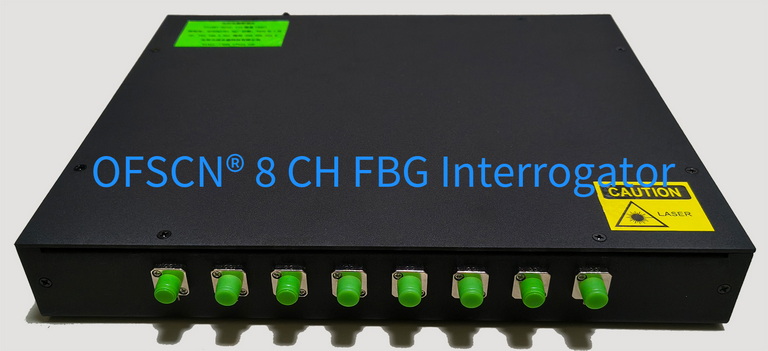
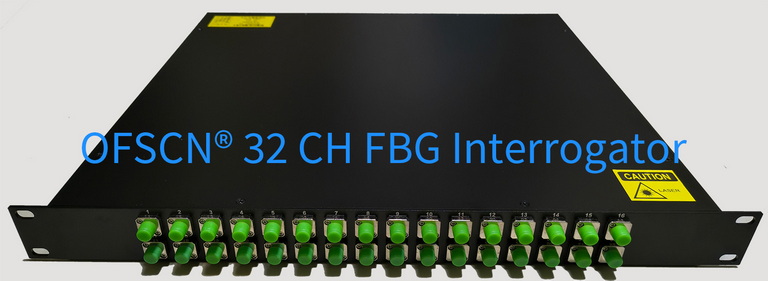
Key Parameter Specifications:
- Default wavelength range: 1525\text{ nm} to 1565\text{ nm}, or 1528\text{ nm} to 1568\text{ nm} (customizable)
- Number of channels: 4, 8, 16, 32 channels customizable
- Data sampling frequency: 10\text{ Hz}, 50\text{ Hz}, 100\text{ Hz} selectable (adjustable down to 1\text{ Hz})
- Wavelength resolution: Default 1\text{ pm}, or 0.1\text{ pm} (customizable)
- Architecture support: Default B/S architecture, supports C/S architecture, supports integration via communication protocols such as TCP, UDP, Modbus.