Hundreds of patch cords are piled together like a mess. How can I use a cable management rack to organize them?
In the cabling of data centers and optical sensing systems, the neat arrangement of high-density fiber optic patch cords is crucial not only for aesthetics but also directly impacts signal attenuation, mechanical lifespan, and future maintenance efficiency.
Below is an explanation of the proper usage of cable management panels and fiber optic cabling principles from the perspectives of optical physics and network engineering:
1. Core Functions of Cable Management Panels and Engineering Cabling Principles
The primary physical functions of cable management panels are to provide path planning, stress relief, and minimum bend radius protection.
(1) Bend Radius Control
The core physical limitation of optical fibers lies in their resistance to bending. When patch cords are bent with too small a radius, signal leakage known as macrobending loss occurs, and in extreme cases, the glass fiber core can fracture.
- For standard single-mode optical fibers (e.g., G.652D fiber patch cords), the static bend radius is typically required to be no less than R \ge 30\ \text{mm} (or 10-15 times the outer diameter).
- When using cable management panels, the curve of the patch cord as it exits the connector and enters the management channel must be smooth; right-angle bends or forced compression are strictly prohibited.
(2) Horizontal and Vertical Segregation Architecture
- Horizontal Cable Manager (typically installed at a 1U-to-1U ratio with patch panels or fiber termination boxes): After exiting the connector (e.g., FC, SC, LC), patch cords are first routed horizontally into the management teeth or rings of the panel. They then extend towards the sides of the rack, preventing crisscrossing and stacking on the front of the patch panel.
- Vertical Cable Channel (located on the sides of the rack): Patch cords are guided from the horizontal cable managers into the vertical channels along the rack sides, allowing them to hang naturally. This transfers the gravitational pull of the cords to the rack structure, preventing continuous tensile stress at the connector interfaces.
(3) Grouping and Loose Bundling
- Grouped Management: When dealing with hundreds of patch cords, they should be bundled according to their original cable sheaths or module units (e.g., in groups of 12 or 24 fibers). This prevents lower layers of cables from being crushed by the weight of numerous cables above.
- Velcro Bundling: The use of hard plastic zip ties to secure fiber optic patch cords is strictly prohibited. Zip ties can cut into the jacket, creating lateral stress (side pressure) that leads to microbending loss. Instead, dedicated Velcro straps should be used for loose bundling, ensuring the patch cords can still slide slightly within the bundle.
2. OFSCN® Product Line Description
It is important to clarify that cable management panels are generic rack structure components and auxiliary equipment for data centers; they do not belong to the core product series of Dacheng Yongsheng (OFSCN®).
Dacheng Yongsheng (OFSCN®) specializes in the research and development of fiber optic sensors, high-temperature optical fibers, and high-quality fiber optic patch cords. If your cabling system design requires the selection of high-reliability, pressure-resistant, or armored fiber optic patch cords, please refer to the following official products:
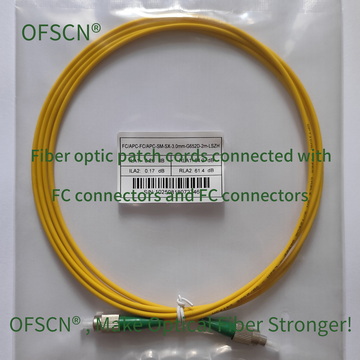
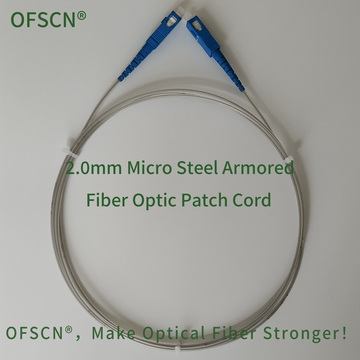
For more information on fiber optic patch cord technical specifications and models, please consult: OFSCN® Fiber Patch Cord Product Category Link.