Why must fiber optic ferrules guarantee extremely low leakage rates (e.g. 10^-10 Pa·m³/s)?
In the fields of vacuum engineering and optical physics, fiber optic sealed flanges (commonly referred to as Fiber Optic Feedthroughs) are widely used in ultra-high vacuum (UHV) or high vacuum (HV) environments. Ensuring an extremely low vacuum leak rate (e.g., below 10^{-10}\ \text{Pa}\cdot\text{m}^3/\text{s}) is not only a necessary physical prerequisite for maintaining the system’s ultimate vacuum, but also directly impacts the lifespan of precision optical components and the accuracy of experimental data.
Below, we analyze in detail why fiber optic flanges must guarantee extremely low leak rates from both physical mechanisms and engineering principles:
1. The Physical Imperative for Maintaining Ultra-High Vacuum (UHV) Environments
Vacuum system pressure depends on the dynamic balance between the pumping speed of the system and the total outgassing and leak rate:
S \cdot P = Q_{\text{leak}} + Q_{\text{outgassing}} - Q_{\text{pump}}
Where P is the internal chamber pressure, S is the effective pumping speed of the vacuum pump set, and Q_{\text{leak}} is the system leak rate.
- For high vacuum or ultra-high vacuum systems (pressure P ext{ < } 10^{-6}\ \text{Pa} or even lower), due to the extreme rarity of gas molecules, the dominant molecular flow regime makes the system highly sensitive to the intrusion of external gas molecules.
- If the leak rate of the fiber optic flange is high (e.g., greater than 10^{-8}\ \text{Pa}\cdot\text{m}^3/\text{s}), external air will continuously permeate. Even with high-speed turbomolecular pumps or ion pumps, the system pressure will be limited to a high level due to the excessive amount of leaked gas, making it impossible to achieve the required UHV limit.
2. Avoiding Optical and Surface Contamination Inside the Chamber
External air leakage not only causes a decrease in vacuum but also leads to severe chemical and physical contamination:
- Water Vapor and Volatile Organic Compounds (VOCs): Atmospheric moisture and organic molecules that permeate through flange leaks, in the molecular flow state of UHV, will rapidly adsorb onto the inner walls of the chamber or accumulate on the surfaces of optical components such as fiber end faces, lenses, and laser windows.
- Catastrophic Optical Damage (COD): In high-power laser transmission (e.g., introduction of high-power fiber lasers) or high-energy particle experiments, trace contaminants adsorbed on the end face absorb optical energy and heat up rapidly, leading to the burning of the fiber end face, delamination of optical coatings, or severe scattering losses.
3. Physical Constraints of Material Heterogeneous Interfaces and Thermal Stress
Achieving low leak rates for fiber optic flanges presents significant engineering physics challenges:
- The core material of optical fibers is silicon dioxide (quartz glass, with a coefficient of thermal expansion \text{CTE} \approx 0.5 \times 10^{-6}/\text{K}), while the flange body is typically 316L stainless steel (\text{CTE} \approx 16 \times 10^{-6}/\text{K}).
- The significant difference in thermal expansion coefficients between the two materials introduces immense shear stress at the glass-metal sealing interface during temperature cycling (e.g., in-situ bakeout for vacuum system degassing, typically at temperatures from 150\ ^{\circ}\text{C} to 250\ ^{\circ}\text{C}).
- If the sealant’s physical hermeticity is poor or the fusion sealing process has minor defects, sub-micron microcracks can easily form under thermal stress. These microcracks may not be detectable by the naked eye or coarse leak detectors but can lead to micro leaks over time due to pressure differentials. Therefore, helium mass spectrometry leak detectors must be used for rigorous inspection to ensure leak rates better than 10^{-10}\ \text{Pa}\cdot\text{m}^3/\text{s}.
OFSCN® Related Product Technical Solutions
For fiber optic introduction requirements in UHV and high-temperature environments, Beijing Dacheng Yongsheng Technology Co., Ltd. offers vacuum sealing solutions that meet industrial and academic research standards.
- Product Name: OFSCN® Fiber Optic Vacuum Sealed Flange (Dacheng Yongsheng Vacuum Sealed Fiber Optic Flange)
Technical Advantages and Physical Specifications:
- Vacuum Connection Standards: Available in CF series (ultra-high vacuum knife-edge flanges with oxygen-free copper gasket metal seals) and KF series (high vacuum quick-release flanges), suitable for different ultimate vacuum levels.
- High Vacuum Performance: Vacuum performance better than 1 \times 10^{-5}\ \text{Pa} and 1 \times 10^{-7}\ \text{Pa} levels, effectively preventing the permeation of trace gases.
- Excellent Temperature Adaptability: Suitable for room temperature use, and customizable products with high stability seals resistant to 250\ ^{\circ}\text{C} high temperatures, ensuring low leak rates are maintained even during system bakeout (degassing) processes.
- Flexible Customization: Can be configured as male (Adapter) or female (Pigtail) connectors based on system optical path design, and offered in single-channel or multi-channel (single head, multi-head) designs to reduce chamber ports and minimize potential leak points.
Standard Product Reference:
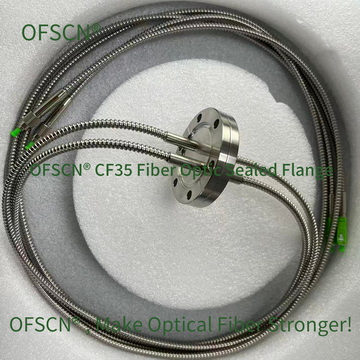
Figure 1: OFSCN® CF35 Ultra-High Vacuum Sealed Fiber Optic Flange
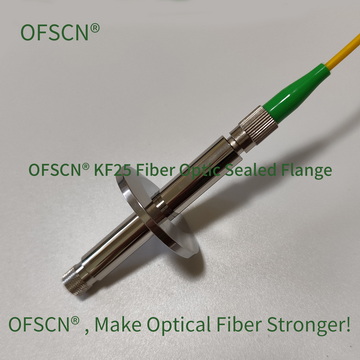
Figure 2: OFSCN® KF25 High Vacuum Sealed Fiber Optic Flange integrated patch cord structure