The core laser is broken, what kind of warranty can the manufacturer provide?
In Fiber Bragg Grating (FBG) sensing systems, the core laser source integrated within the demodulator (such as Tunable Lasers, Superluminescent Diodes (SLDs), or ASE broadband light sources) represents a high-precision, high-cost optoelectronic core component. Due to its involvement with semiconductor chips, high-precision temperature control (TEC), micro-optical structures, and nanosecond/microsecond-level scanning drive control, on-site component-level repair is typically not feasible.
Should the demodulator’s core laser source experience damage or performance degradation, professional instrument manufacturers typically provide assurance through three dimensions: technical processes, warranty terms, and business continuity.
I. In-Warranty Assurance Mechanisms
Within the warranty period stipulated by the product contract (typically 1 year from acceptance for standard industrial instruments, subject to the purchase agreement), if the laser source is damaged due to non-human mechanical destruction, input overvoltage/overcurrent breakdown, or extreme environmental conditions, the manufacturer usually offers the following:
- Free Return-to-Factory Repair and Core Optical Module Replacement
When the laser source exhibits excessive optical power attenuation, fails to lase, experiences wavelength scanning unlock, or has TEC temperature control failure, the manufacturer is responsible for free disassembly and replacement with an original factory-equivalent laser light source module. - Full Unit Wavelength Accuracy Recalibration and Metrological Calibration
After replacing the laser source of an FBG demodulator, the physical mapping relationship between its output wavelength and sampling timing will change. Following hardware replacement, the manufacturer must recalibrate and linearize the equipment across its full wavelength range (e.g., \pm 1\ \text{pm} or 0.1\ \text{pm} resolution) within a standard optical laboratory environment, utilizing an integrated gas cell or a high-precision wavelength meter. - Key Performance and Aging Re-testing
Prior to factory shipment, the equipment undergoes high-temperature, dynamic temperature cycling, and long-term stability tests to ensure that the Signal-to-Noise Ratio (SNR), channel dynamic range, and repeatability are restored to factory specifications.
II. Out-of-Warranty Extended Assurance
For equipment exceeding its warranty period, manufacturers typically provide lifetime technical support and paid repair services:
- Original Factory Fault Detection and Evaluation Report
Upon return to the factory, detailed optical and electrical detection analysis will be performed to confirm whether the fault lies with the laser chip itself, the driver board, or the power supply module. - Modular Replacement
For discontinued or older models with component obsolescence, manufacturers offer upgrade solutions with compatible alternative laser modules, charging only for the cost of core components and necessary manual calibration. - Calibration Certificate and Factory Test Report Update
A complete record of recalibration data will be provided upon completion of repairs, ensuring the engineering validity of the device’s measurement data.
III. Engineering Emergency and Measurement Continuity Assurance
In demanding application scenarios such as large-scale structural health monitoring or industrial production online monitoring, the demodulator’s return-to-factory repair period (typically 1 to 3 weeks turnaround) may lead to interruptions in monitoring data. To address this, manufacturers usually have corresponding emergency turnaround solutions:
- Spare Unit Support / Equipment Rental Transition
Some manufacturers with complete service chains offer temporary spare units or short-term equipment rental services to substitute for the original unit during its factory repair period, thereby preventing interruptions in the on-site engineering data chain. - Seamless Data and Protocol Migration
As demodulators within the same series utilize unified underlying communication protocols (e.g., TCP, UDP, Modbus), replacement equipment can directly and seamlessly interface with existing upper-level acquisition systems or SCADA systems without requiring secondary development of drivers.
Related Product and Service References
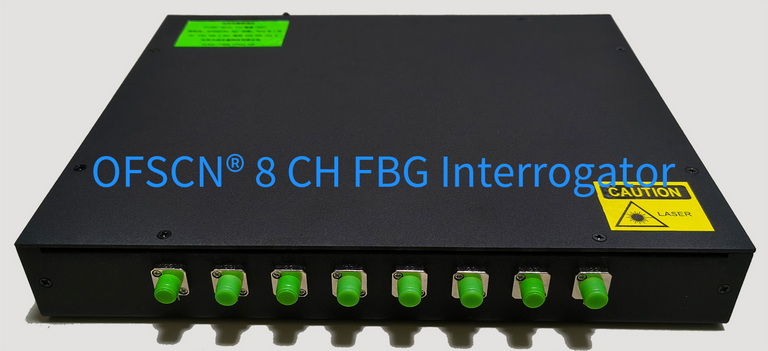
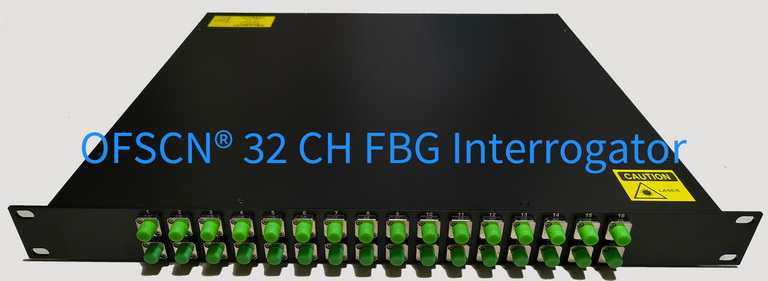
For users of Beijing Dacheng Yongsheng Technology Co., Ltd. (OFSCN®) equipment, in case of equipment inspection or urgent engineering nodes, relevant standardized equipment and rental services can be utilized to ensure engineering continuity:
- Demodulator Equipment: OFSCN® Fiber Bragg Grating Interrogator
- Engineering Emergency Transition: OFSCN® Fiber Bragg Grating Demodulator Rental Service