Why are APC (8-degree angle) connectors typically mandatory in FBG sensing systems?
In FBG sensing systems, APC (Angled Physical Contact) connectors with an 8-degree angle polish are typically mandatory due to their superior performance in minimizing back-reflection.
Here’s why:
- Reduced Back-Reflection: APC connectors significantly reduce back-reflection (also known as optical return loss) compared to PC (Physical Contact) connectors. The 8-degree angle ensures that any reflected light is directed away from the fiber core, preventing it from returning to the light source or interfering with the sensor signal.
- FBG System Sensitivity: Fiber Bragg Grating (FBG) sensing systems are highly sensitive to back-reflection. Even small amounts of reflected light can cause interference, generate ghost signals, or introduce noise, which can severely degrade measurement accuracy for parameters like strain or temperature.
- Signal Integrity: By minimizing back-reflection, APC connectors help maintain the integrity of the optical signal, ensuring a higher signal-to-noise ratio and more reliable data acquisition from the FBG sensors. This is crucial for precise wavelength detection, which is the operational principle of FBG sensors.
Many of our FBG products, such as the OFSCN® Standard Femtosecond Fiber Bragg Gratings / Fiber Bragg Grating Strings (Bare), default to FC/APC connectors to ensure optimal performance.
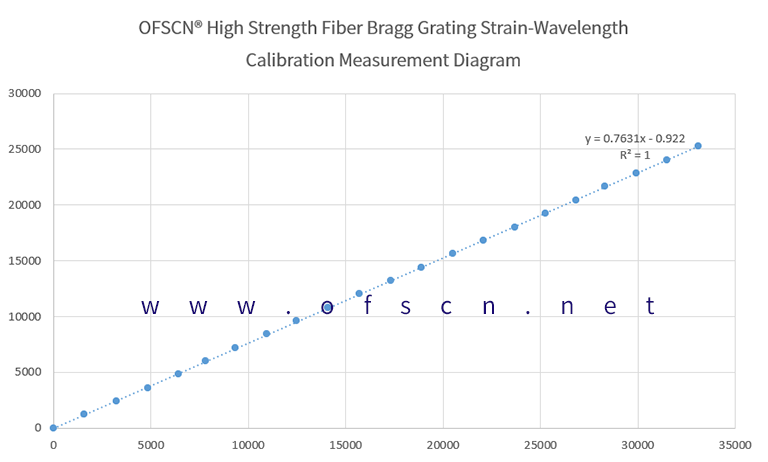
Here is a general image related to FBG technology: