How can I find out which worker processed this jumper cable by scanning the barcode?
In modern fiber optic communication and fiber optic sensing manufacturing industries, tracing back to specific grinding workstations and operators via the barcode on fiber optic patch cords relies on the MES (Manufacturing Execution System) and Unique Identification Serial Number (UID / SN) Traceability System established by the factory.
The specific technical traceability principles and query process are as follows:
I. Core Traceability Principle
The barcode on the fiber optic patch cord (1D, 2D, or DataMatrix) is essentially the Serial Number (SN), the unique identity identifier of the patch cord within the manufacturing system. The barcode itself typically does not directly store the operator’s name in plain text but serves as an Index Key to the full process log in the manufacturing database.
In a standard fiber optic patch cord production process, each critical workstation employs a “Scan and Pass” (WIP Tracking) mechanism:
- Work Assignment and Operator Login: Operators log in to the grinding machine terminal using their employee ID card.
- Workpiece Binding and Pass Trigger: Before and after the end-face grinding (rough grinding, intermediate grinding, fine grinding, polishing) of the patch cord, the barcode on the patch cord body or its accompanying workflow card is scanned.
- Manufacturing Parameter Association and Storage: The system automatically binds this barcode (SN) in real-time with the following data and stores it in the MES database:
- Operator (Operator ID / Employee ID)
- Grinding Equipment and Fixture Number (Machine ID / Polishing Fixture ID)
- Grinding Consumable Batch (Grinding paper model, polishing slurry batch number, number of times the polishing disc has been used)
- Timestamp (Grinding start and completion time, precise to the second)
- Subsequent Inspection Associated Data (Radius of Curvature ROC, Apex Offset, Fiber Height measured by a 3D interferometer, and end-face microscopic inspection images)
II. How to Query for a Specific Operator via Barcode?
To complete a specific traceability query, follow these steps:
- Read Barcode Information: Use a barcode scanner or mobile device to read the barcode on the patch cord’s boot, cable label, or packaging bag to obtain its corresponding character sequence (typically an alphanumeric combination of 8 to 20 characters).
- Submit to the Production Manufacturer’s Database for Retrieval: Since the production process log is internal quality control data of the manufacturing enterprise (unauthorized general-purpose scanning software can only recognize plain text strings), the SN code needs to be provided to the Quality Assurance/Quality Control (QA/QC) department of the patch cord’s production manufacturer.
- MES / ERP System Retrieval Path: The factory’s quality engineers input the SN code into the “Process Traceability / History Record” module of the MES system. By retrieving the 【Connector Polishing Step】 in the process route, they can then display the corresponding Operator ID, team information, and grinding machine records for that step.
III. Related Product References
Standard fiber optic patch cords and various special armored patch cords produced by Beijing Dacheng Yongsheng Technology Co., Ltd. (OFSCN®) strictly adhere to industrial-grade manufacturing and quality traceability standards:
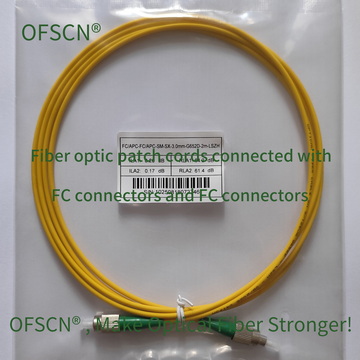
- OFSCN® Standard Fiber Patch Cord
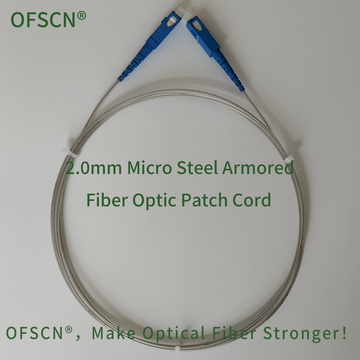
- OFSCN® 2.0mm Micro Steel Armored Fiber Optic Patch Cord
- OFSCN® 3.0mm Steel Wire Rope Fiber Optic Patch Cord